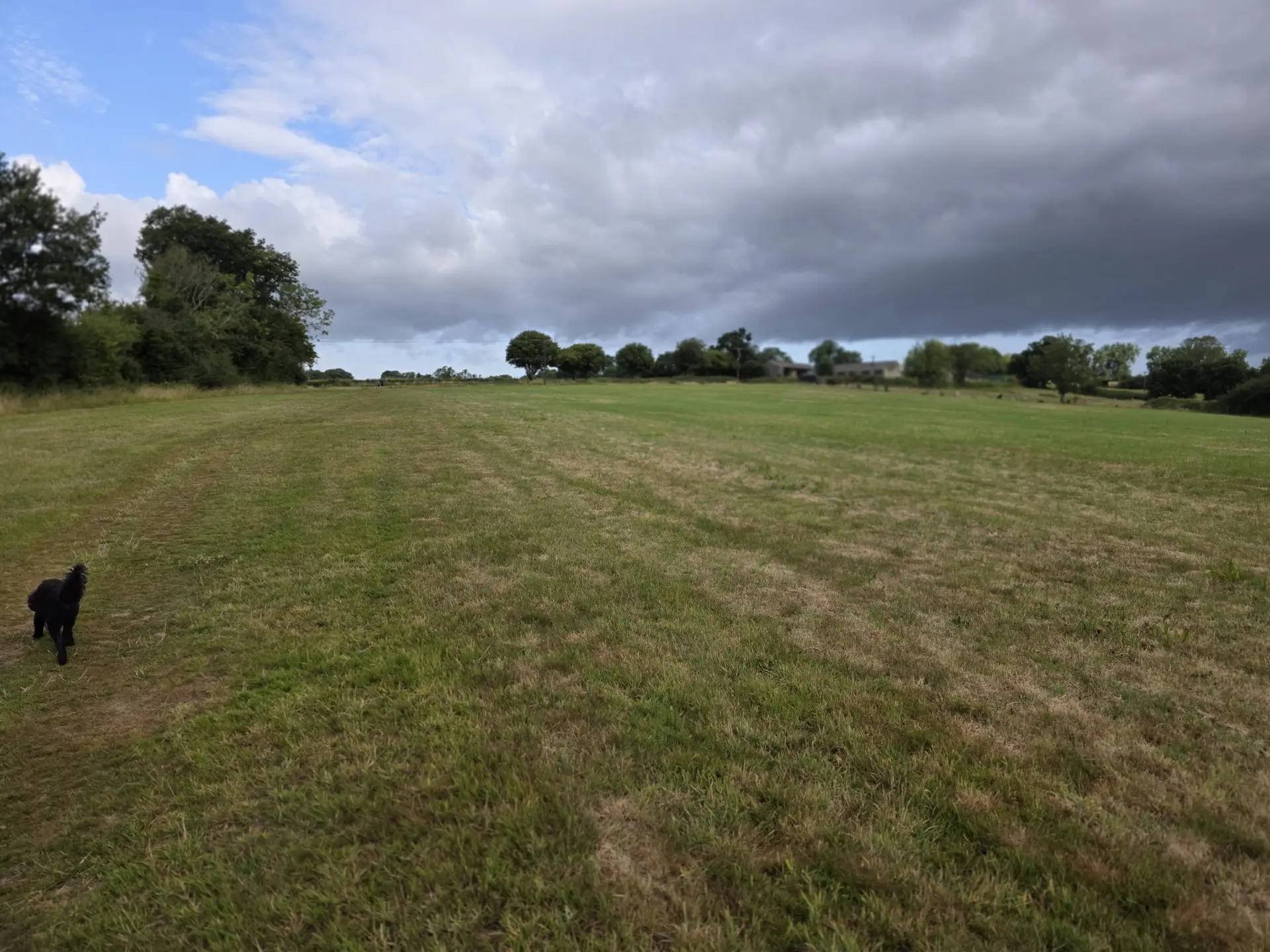
The sky was heavy this morning. As I stepped out into the open field behind the house, the first thing that struck me wasn’t the breeze or the dew underfoot, but the enormous black cloud looming on the horizon. (and as I post this the heavens have just opened) A thick, moody thing stretching low across the sky like it was ready to swallow up the countryside. To most grown-ups, this is simply the weather: a sure sign to pack away the picnic basket, grab a raincoat and prepare for a soggy afternoon. But to a child, a cloud like that could mean anything. And that is exactly where children’s stories begin and why I love writing for children.
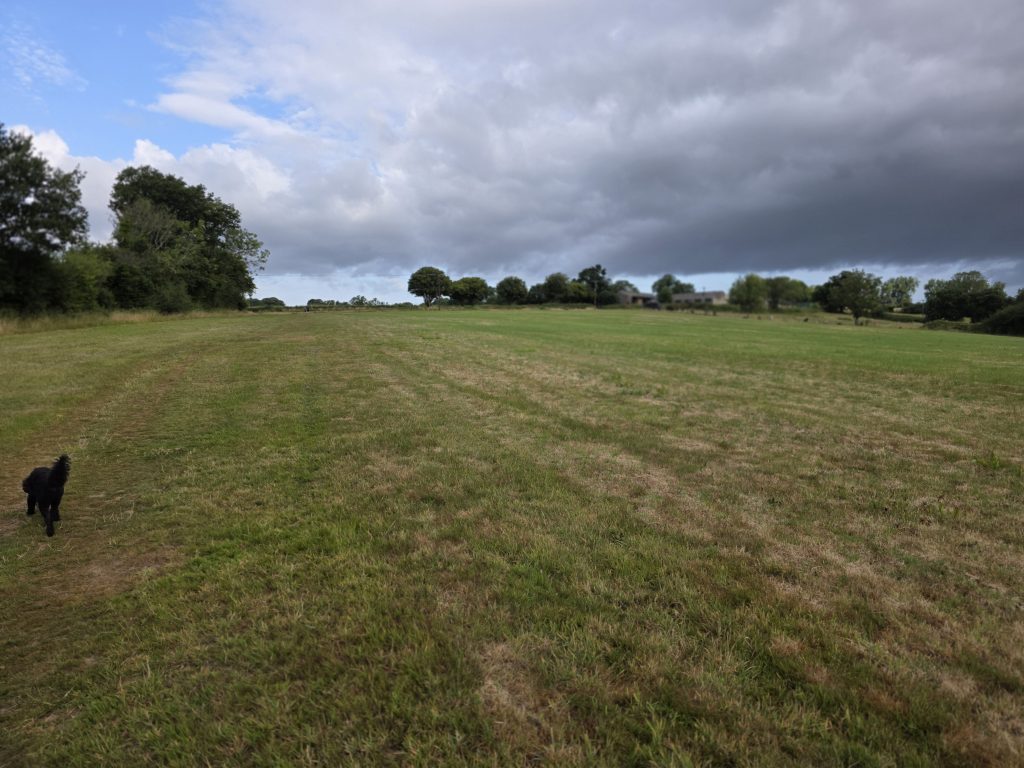
When I was a boy, clouds weren’t just clouds, perhaps the same is true for you,. They were dragons curled in the sky, ancient whales swimming across the heavens, or entire kingdoms floating above the earth. One day, I was convinced I saw a castle up there, its spires poking through the cotton wool of a cumulus, guarded by sky-knights with wings of lightning – hmm this sums up my novel I am working on!. That’s the thing about children: they don’t see the world as it is, but as it could be or even should be. And when I sit down to write a children’s book, that’s the world I try to return to.
When is Magic Lost?
Adults tend to lose that sense of magic. Somewhere between the school run, bills, and that eternal to-do list, we stop seeing dragons and start seeing delays. A cloud is no longer a story, it’s a signal to check the weather app. I often wonder when that change happens. Is it gradual, or does it vanish in one go like a soap bubble popped by time? Whatever the cause, writing children’s books has helped me reclaim some of that lost wonder. And often, it begins with something as simple as a cloud.
Take this morning’s cloud, for example. As I watched it stretch its long grey fingers across the sky, I imagined a tale. What if the cloud wasn’t just a cloud, but a witch’s cloak, trailing behind her as she zoomed across the sky on her broomstick? Or perhaps it was the smoke from a great steam-powered sky ship, chugging along a path only visible to those who still believe in invisible things. Maybe, just maybe, it was the breath of a giant who had just woken from a thousand-year nap and was yawning his way into the day.
Writing for children isn’t about teaching them to imagine – they already do that better than anyone. It’s about giving them the space, the stories, and the permission to do it even more. It’s about saying, “Yes, you can think that,” or “Why not?” when the world keeps telling them, “That’s silly.” When I write, I want to spark that same joy I felt staring up at the sky, trying to guess what adventure was hidden in the clouds.
Imagination is a Muscle
Imagination is a muscle, and stories are the gym. If we don’t use it, it weakens. That’s why I think reading is so vital, especially for kids. Each story they read is like a set of wings, and every page a gust of wind that lifts them higher. Whether it’s a chicken learning to fly, a space ranger saving the galaxy, or a princess taming a dragon made of stardust, these tales show children that anything is possible. More importantly, they show them that they can be the hero.
And let’s not forget the power of the simplest ideas. Some of the best children’s books started with a small observation. A bear who forgot his hat. A caterpillar who ate a lot. A rabbit who just wouldn’t go to bed. A black cloud, to me, is the same. It can be the spark that lights up an entire world.
I often tell people who want to write for children to look less at what children are reading and more at what children are seeing. The world is their storybook, full of possibilities. A puddle isn’t just water on the ground, it’s a portal to another dimension. A stick isn’t just a stick, it’s a sword, a wand, or a key to an ancient treasure chest. Writing for children is a licence to return to that place where sticks were everything but sticks.
The challenge, of course, is balance. Writing for children is not about being childish. It’s about being childlike. There’s a difference. Children are smarter than we give them credit for. They know when you’re trying too hard or talking down to them. They want stories that are fun, yes, but also meaningful. They want to laugh, but they also want to be brave, to be challenged, and to feel big emotions in small bodies. That’s where imagination does its best work – in places where it meets truth.
And the Rain Came Down
That black cloud this morning eventually burst, turning into one of those satisfyingly British downpours – the kind that catches you unprepared. I stood there for a few minutes, no coat, no brolly, and not particularly bothered. The rain dripped from my nose, soaked through my T-shirt, and still I grinned. Because to me, it wasn’t just rain; it was the sky playing its part in the story I’d imagined earlier. The witch’s cloak had unravelled into mist. The giant’s breath was now falling to earth. The great sky ship had vanished behind a veil of silver.
Later, as I dried off and sat at my desk, the rain still hammering at the windows, a low rumble of thunder echoed in the distance. My dog tucked himself under my writing chair, thoroughly unimpressed. But I was already lost in another world, scribbling down the bones of a new tale. Maybe the witch isn’t wicked after all. Perhaps that sky ship is captained by a mouse with a mechanical arm. Or maybe the giant will open his eyes and discover a world utterly changed from the one he remembers. It all began with a cloud. And now, with thunder and tails under tables, the next chapter is waiting to be written.
I suppose the heart of this post is really about looking up. Whether you’re a writer, a parent, or just someone who’s forgotten how to see the world like a child, try looking up. Let the clouds be more than clouds. Let the world surprise you again. And if you’re moved to write a story, no matter how silly it may seem, write it. The best children’s stories don’t come from perfect plans, they come from imperfect, glorious bursts of imagination.
So the next time a child tells you there’s a dragon in the sky, don’t correct them. Ask them what its name is. Ask them where it’s going. And most of all, listen. Because they might just help you see it too.
And who knows?
Maybe your next book will begin with a cloud.
Until next time, Matt

Leave a Reply