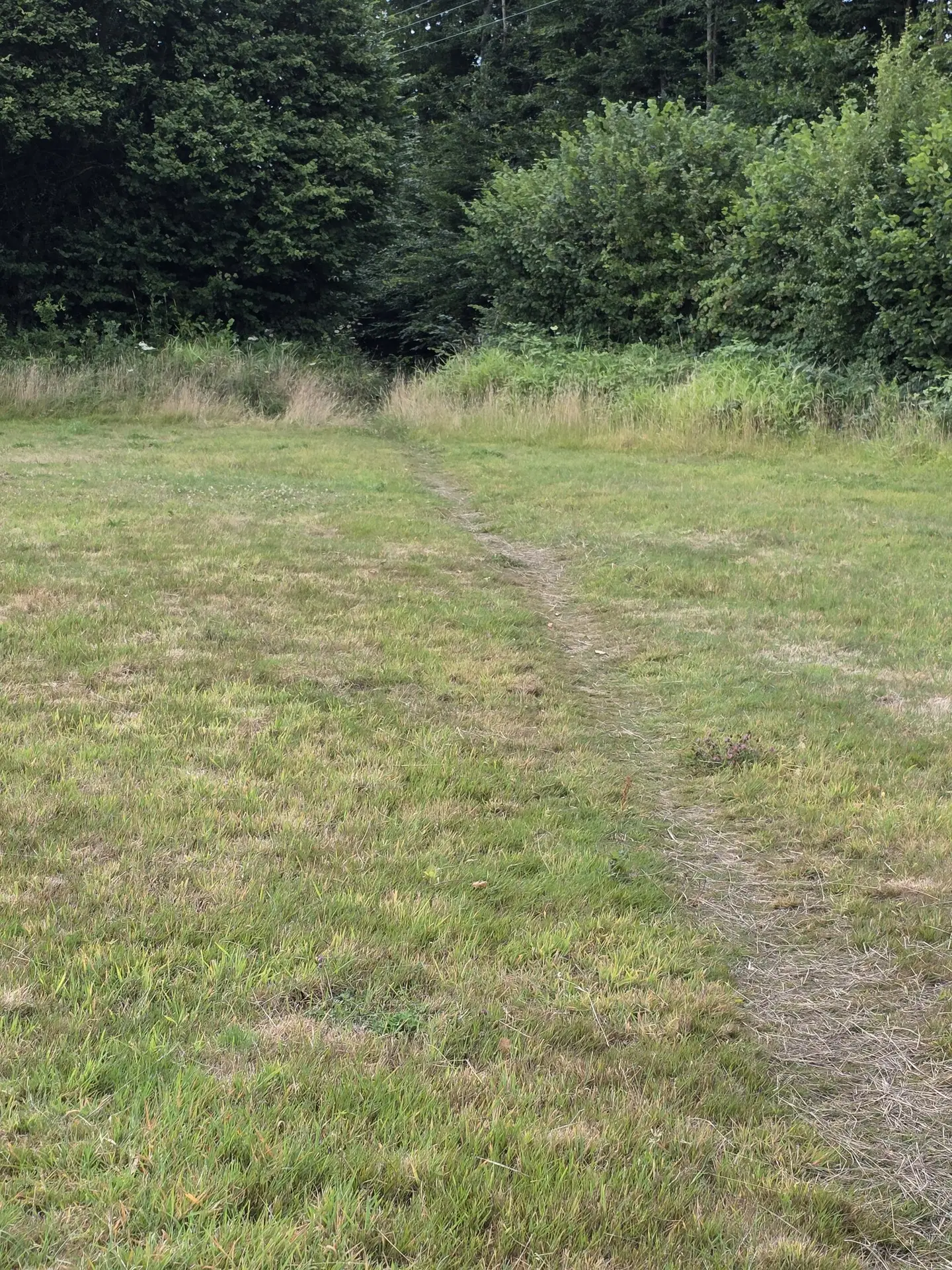
There’s something undeniably poetic about paths.
Some are well-trodden, clearly marked, paved with purpose. Others are faint, barely visible tracks through grass, carved by deer or by chance. Some roads lead to somewhere definite, destinations mapped and expected. Others vanish into forests, end at locked gates, or drift off into the realm of possibility.
I’ve walked all kinds of paths.
The kind laid down by others, the ones that say “this is how it’s done.” The kind that take you safely from point A to point B, and the kind that lead you in circles until you’re dizzy with doubt. And then there are the paths I never meant to walk, and the ones I’ve had to make myselfnwith nothing but an idea in my head and a ridiculous pair of shoes on my feet.
So what does this have to do with children’s books, with writing, with Space Ranger Fred?
Everything.
Because creating something, especially for children, isn’t just about telling a story. It’s about choosing a path, whether that path is smooth and predictable, wild and uncertain, or one you carve yourself with sheer will and a blunt machete.
The Concrete Path: Safe, Straight, and Expected
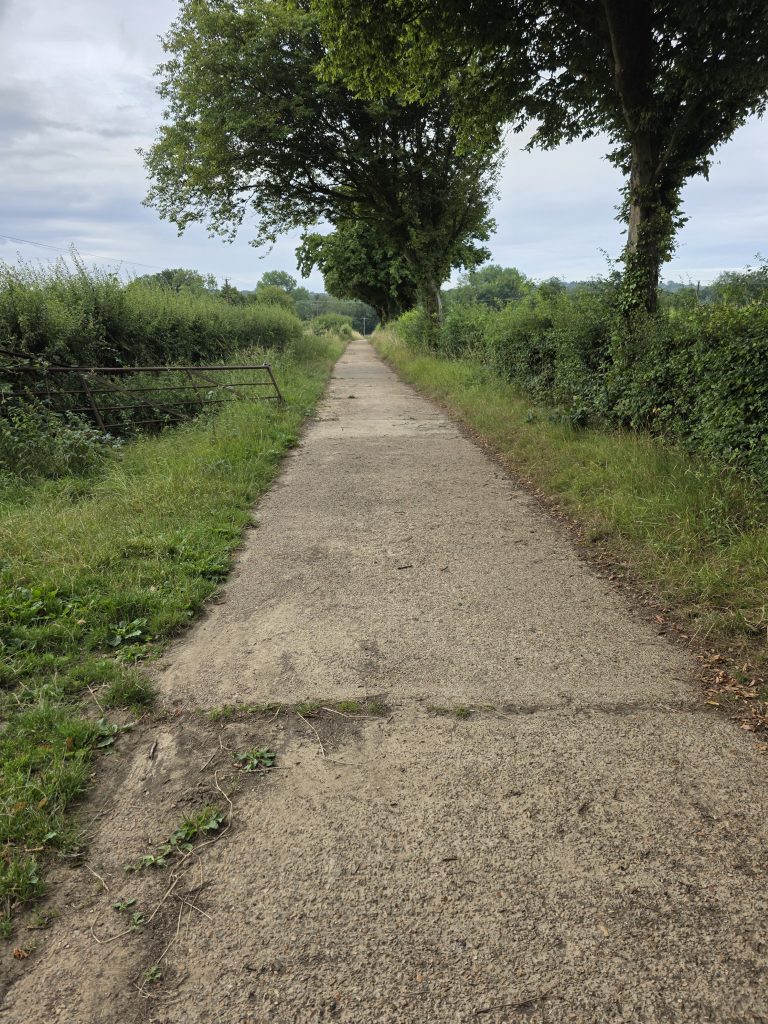
Look at the image above—a concrete path stretching out straight into the horizon, bordered by trees and hedgerows. It’s easy on the feet, familiar underfoot. You know where you’re going. No surprises.
There’s a certain comfort in that.
In the world of publishing, this is the “do what works” approach. Stick to the formulas. Write to the trends. Follow the advice blogs and YouTube gurus who swear by three-act structures, character arcs that fit neatly into colour-coded templates, and themes that are proven to sell.
And honestly?
There’s nothing wrong with that. That path exists for a reason. It gets you somewhere. It’s tried and tested and well-lit. If you’re just starting out—or if you want to get your book into schools, libraries, or into the hands of parents who are risk-averse—it can be a brilliant path to follow.
But here’s the catch: it’s also the path everyone else is on.
There’s no room to dance or dawdle or take in the view. You’re moving in a straight line, doing the expected, writing the familiar.
That’s not where Space Ranger Fred came from.
The Worn Track: Personal, Quiet, Almost Invisible
Now take a look at the image below—a track through the grass, worn down just enough that you notice it if you look carefully. It’s not official. There’s no signpost. Just a whisper of footsteps that came before you, encouraging you to wander that way.
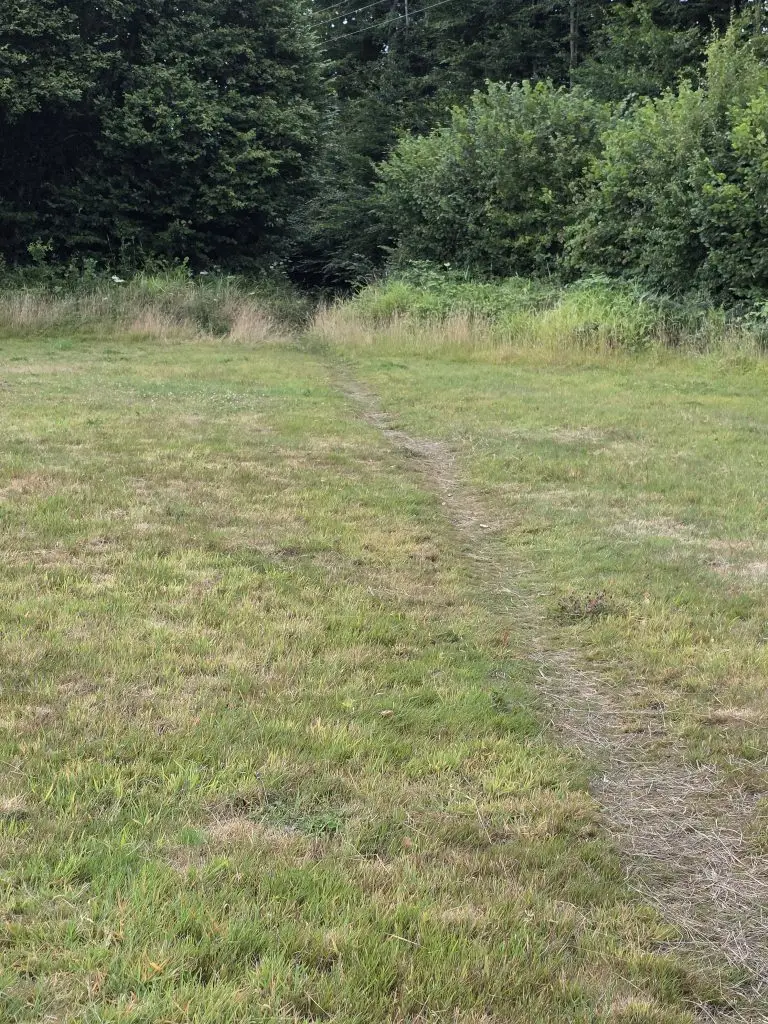
This is the kind of path I often find myself on as a writer.
It’s not carved in stone, but it’s real. It’s what happens when you follow your curiosity, not a guidebook. It’s messy and it can feel lonely, but it’s yours. And sometimes, those paths that look like they go nowhere—those odd ideas scribbled on napkins, those silly conversations in the car—end up leading to entire worlds.
That’s how Space Ranger Fred began.
Not with a market analysis. Not with a plan.
With a question from a kid.
“What if happen if you baked a cake on the moon?”
You don’t plan for that. You follow it.
You treat it like a track in the grass—maybe it goes somewhere, maybe it doesn’t. But it’s fun. It’s wild. And it feels alive.
The Made Path: Carving Through the Wilderness
There’s another kind of path altogether.
The kind that doesn’t exist yet.
The kind where you’re not following someone else’s footsteps, or even a faint trail in the grass, but carving a way through brambles, wildflowers, and doubt with a rusted compass and an overgrown imagination.
It’s the path of the impossible.
The one that people say you probably shouldn’t take. It’s hard. It’s unpredictable. And it might not work.
This is the path of creators who dare to do something completely different.
It’s the path I now find myself on with Space Ranger Fred—turning a children’s book into an animated TV series, a STEM-powered video game, and something that might just help kids learn and laugh at the same time.
Nobody told me how to do that. Nobody gave me a map. The tools change daily, the jungle grows back behind me, and some days, I wonder if I’m utterly mad.
But I also know this:
When kids smile at Fred and his dog Jupiter, when they get curious about science, about baking on the moon or decoding Martian recipes—that’s when I know I’m on the right path. Even if I had to make it myself.
Which Path Should We Take?
If you’re a writer—or a dreamer of any kind—you’ll hear a lot of advice about which path is “right.”
Take the easy road. Go with what sells.
Or…
Take the impossible one. Be original, even if it hurts.
But maybe it’s not either/or. Maybe it’s about knowing what kind of path you’re on, and why.
Here’s what I’ve learned:
- The straight path will teach you structure, discipline, and how to meet expectations. It’s great for learning.
- The track in the grass will remind you that stories can come from anywhere, even quiet places. That’s where the magic lives.
- The untrodden path will test your courage—but also reward you with moments that nobody else gets to see.
Sometimes, the best route is a mix of all three.
What Would Space Ranger Fred Do?
Let’s ask the real expert here.
Space Ranger Fred doesn’t follow maps. He doodles his own.
He bakes anti-gravity muffins in black holes. He rides moon scooters powered by marshmallow fuel. And when he gets lost in the Andromeda Sprinkles Belt, he doesn’t panic—he follows the scent of cinnamon to the nearest exit.
Fred’s world is a wild blend of the known and the unknown. Science meets silliness. Education meets entertainment. STEM meets sugar.
And that’s not an easy path to build.
It’s very tempting to go back to the safer road. Write something more ordinary. More serious. Less weird.
But where’s the fun in that?
Children deserve wonder. They deserve paths that go somewhere new. That’s what Space Ranger Fred is for. That’s what stories are for.
To show them that it’s okay to explore. To try. To get it wrong. To laugh at your own disasters. And to find unexpected joy in tangled forests and star-dusted skies.
The Path Beyond Writing
This post isn’t just for writers. It’s for anyone standing at a crossroads.
Should you take the job that’s safe or try the thing that might not work?
Should you follow the rules or ask questions?
Should you publish the predictable book or the one that sets your soul on fire?
Here’s my advice: follow the path that makes your heart beat faster—not just your wallet or your ego. Sometimes that’s the road everyone else is on. Sometimes it’s the track only you can see.
And sometimes… you have to grab your walking stick, lace up your boots, and make the path yourself.
How This Applies to Young Readers
Children learn not just by what we tell them, but by what we show them.
When we give them books with neat lessons and polished endings, they learn safety.
When we give them stories with chaos, colour, and questions, they learn courage.
With Space Ranger Fred, I want to show kids that science doesn’t have to be scary. That mistakes are part of learning. That friendship can come from the weirdest places. That imagination matters.
That the path they choose—whether it’s becoming an astronaut, a baker, a coder, or a poet—is theirs to walk.
Even if it hasn’t been made yet.
Final Thoughts: The Path You’re On
So here I am. Somewhere between the grass and the gravel. Writing books. Building worlds. Launching a children’s animation with a tiny budget, a lot of coffee, and a team scattered across the planet.
It’s hard. But it’s mine.
And if you’re reading this, you’re part of it. You’re on this path with me.
Whether you’re a fellow writer, a parent, a teacher, or just someone who believes kids deserve better stories—I thank you.
Because every step we take, every story we write, every brave or silly choice we make—it matters.
It shows the next generation that they can walk any path they choose.
Even the one no one else can see.
Even the one that leads to a bake-off on the moons of Saturn.
Keep walking. Keep writing. And if the path disappears—make your own.
Yours in stardust and scribbles,
Matt Newnham
Author of Space Ranger Fred and other wonderful nonsense

Leave a Reply