
When people ask me what inspired me to become a writer, there’s one name that comes to mind almost instantly: C.S. Lewis. More specifically, The Chronicles of Narnia. These stories lit the spark in my imagination that still burns to this day.
I was around nine or ten years old when the magic began. My mum bought me a second-hand boxed set of Narnia books at a local jumble sale. They were a little worn, well-thumbed, and smelled faintly of a dusty bookshelf, but to me, they were treasure. That night, I cracked open the first one, and from that moment, I was hooked.
First Encounters with Narnia
My earliest memory of the magic of Narnia wasn’t actually the book The Lion, the Witch and the Wardrobe. It was The Magician’s Nephew, and I didn’t even read it myself at first. It was being read to us in class at primary school. I still remember how intently I listened, hanging on every word. I was completely drawn into this fantastical world of rings, pools, magical woods, and the breathtaking creation of Narnia itself.
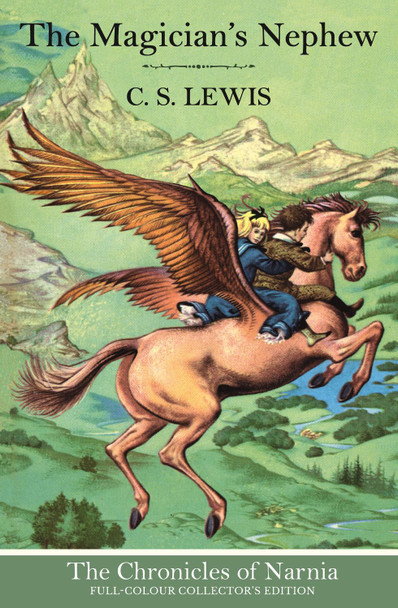
At that young age, something in my mind stirred. As the teacher read aloud, I had this clear thought: “One day, I want to write something like this.” That wasn’t a passing thought—it was a seed planted deep within me. Even then, I knew there was something incredibly special about what C.S. Lewis had created.
A World Unlike Any Other
Narnia wasn’t just a story. It was a fully formed world with its own rules, landscapes, creatures, and magic. Lewis had a way of drawing you in gently, page by page, until you weren’t just reading about Narnia…you were in Narnia.
Whether I was walking through the snowy woods beside Lucy and Mr Tumnus, sailing with Caspian on the Dawn Treader, or standing at the edge of Aslan’s Country in The Last Battle, I was always fully immersed. The imagery was vivid, the characters so wonderfully real, and the narrative so crystal-clear that I couldn’t help but fall headfirst into the world again and again.
And I did. I didn’t just read the series once, I’ve returned to it over and over throughout my life.
Rediscovering Narnia as an Adult
What’s remarkable about the Narnia books is how they grow with you. When I first read them as a child, they were thrilling, magical adventures with talking animals and epic battles. As I got older, I began to see more of the underlying themes and symbolism. I began to understand the emotional weight behind the stories and the thoughtful ideas they carried.
As an adult, I’ve returned to the series at different times in life—when I needed comfort, inspiration, or just wanted to revisit a familiar world. And every time, without fail, I’ve found something new. That, to me, is the sign of a truly great book. A great book grows with you, stays relevant, and keeps revealing its wisdom in fresh ways. C.S. Lewis’s writing does exactly that.
The Writer Behind the Magic
Reading more about Lewis as I grew older helped me understand his books even more deeply. I began reading his other works—his Christian writing, his essays, and his letters—and it opened up a new dimension of understanding. Lewis wasn’t just telling stories for the sake of storytelling. There was heart, purpose, and profound meaning behind his words.
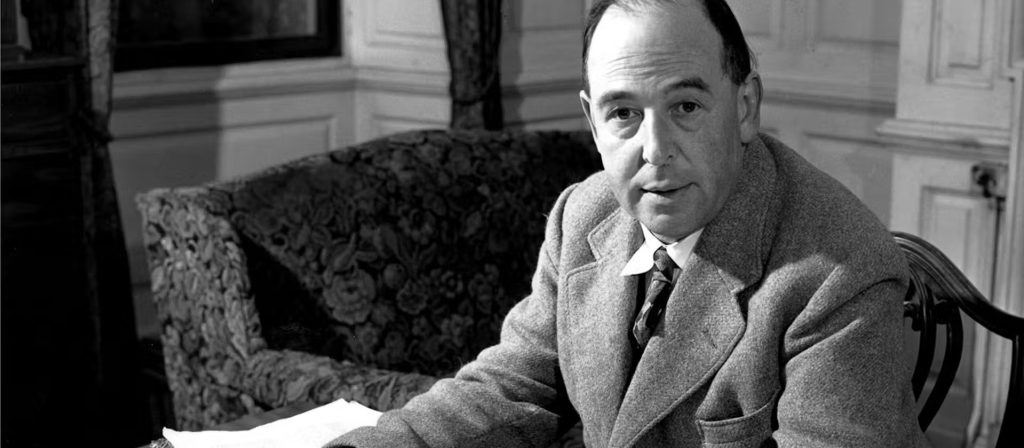
Books like Mere Christianity and The Screwtape Letters gave me insight into Lewis’s worldview, his intellect, and his own journey of faith. Knowing where he was coming from helped me appreciate Narnia even more. His ability to weave deep truths into simple, accessible stories is something I greatly admire—and aspire to emulate in my own writing.
Simplicity, Clarity, and Imagination
One of the reasons C.S. Lewis’s stories work so well—especially for children—is because they are clear. His prose is simple without being simplistic. His storylines are rich without being confusing. He trusted the reader’s imagination, guiding it gently rather than overwhelming it with detail. And above all, he respected his audience, no matter their age.
That’s a lesson I’ve carried into my own writing. Whether I’m creating an outlandish space adventure or a fairy tale with chickens and princesses, I try to keep my writing clean, character-driven, and engaging. Lewis proved that you don’t need overcomplication to tell a powerful story. What you need is heart, purpose, and imagination.
And my goodness, Lewis had imagination in abundance.
The Narnia Code
A few years ago, I stumbled upon The Narnia Code: C.S. Lewis and the Secret of the Seven Heavens by Michael Ward. The book explores an intriguing theory that each of the seven Narnia books corresponds to one of the seven medieval planets, each linked to a spiritual theme or tone that reflects that planet’s character. It’s a deep dive into the hidden structure and intention behind the series.
Reading it gave me a whole new appreciation for the craftsmanship behind the books. It made me realise just how layered Lewis’s work was. On the surface: a magical adventure for children. Beneath that: spiritual insight, medieval cosmology, moral philosophy, and deep emotional resonance. It’s astonishing what was packed into what felt like such effortless storytelling.
That level of thought and purpose inspires me as a writer. It reminds me that great stories often carry deeper messages—even if the reader doesn’t immediately see them. Writing for children doesn’t mean writing without depth. In fact, it might be the most important place to include it.
Screen Versions: The Good, The OK, and the Book is Better
Like many Narnia fans, I’ve followed the various screen adaptations over the years. I remember watching the BBC adaptations between 1988 and 1990. They were slow, a little clunky, and the costumes left much to be desired—but they were wonderfully sincere. There was heart in those shows, and as a child, I loved them.
Later came the Hollywood movies. Bigger budget, flashier effects, and generally easier to watch. I enjoyed them too—The Lion, the Witch and the Wardrobe was especially well done—but to me, they never quite captured the depth and wonder of the books.
That’s the challenge with adaptations. The magic of a book isn’t just the plot—it’s how it’s told. It’s the tone, the rhythm, the emotion behind the words. It’s the connection between the author and the reader’s imagination. No screen can quite replicate that.
Still, I’m grateful those adaptations brought Narnia to a new generation. Maybe some of those young viewers went on to read the books—and maybe, like me, they were inspired to start writing too.
Why Narnia Still Matters
In a world of fast-paced digital media, instant gratification, and algorithm-driven content, there’s something deeply grounding about the Narnia books. They encourage patience, wonder, imagination, and moral clarity. They tell us that ordinary children can be heroes, that courage matters, and that even the most flawed characters can find redemption.
These are messages that resonate just as strongly today as they did when Lewis first wrote them.
As a children’s author, I often ask myself: What do I want young readers to feel when they finish one of my books? Do I want them entertained? Yes. Do I want them to laugh? Absolutely. But more than anything, I want them to believe. Believe in their imagination. Believe in doing the right thing. Believe that stories matter. Because they do.
Stories shape us. They help us see who we are and who we might become. And for me, Narnia was the first story that truly opened that door.
Thank You, C.S. Lewis
So this is my heartfelt thank you.
Thank you, C.S. Lewis, for daring to imagine a world where lions talk, fauns carry umbrellas, and children become kings and queens.
Thank you for writing books that still light up hearts more than seventy years later.
Thank you for showing me that stories can be powerful, meaningful, and full of wonder.
Thank you for planting the seed that would grow into my own love for storytelling.
Thank you… for Narnia.
Coming Next in the Series:
How Roald Dahl taught me to be cheeky, brave, and unashamedly imaginative.
Stay tuned. And if you grew up with Narnia too, I’d love to hear what it meant to you in the comments.
—
Matt Newnham is the author of children’s books including the Space Ranger Fred series and Princess & Chicken. He writes to inspire kids (and adults) to dream, imagine, and smile a little more every day.
www.mattnewnhamauthor.com
@mattnewnhamauthor

Leave a Reply