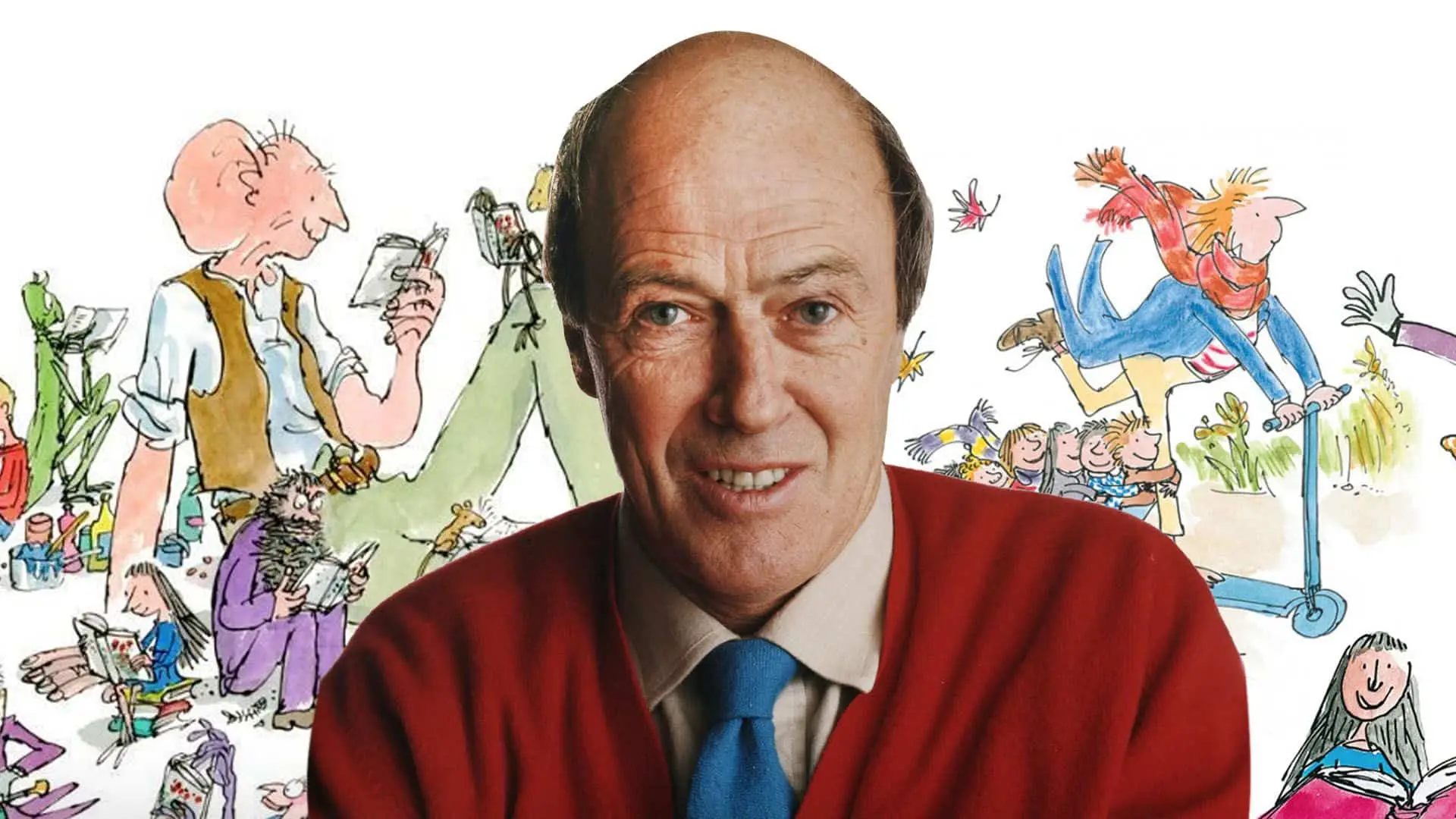
I first read Charlie and the Great Glass Elevator when I was about twelve years old. I’d already seen Willy Wonka and the Chocolate Factory with Gene Wilder and loved it: eccentric, surreal, and completely captivating. Naturally, I went looking for the books.
That day at the library, I pulled a slightly battered copy off the shelf. The cover grabbed me immediately, thanks to Quentin Blake’s unmistakable illustrations.
The story? Absolute chaos in the best way. Space travel, Vermicious Knids, politics, chocolate, and madcap inventions. I devoured it.
Then I read Charlie and the Chocolate Factory, The Twits, Matilda, George’s Marvellous Medicine, Fantastic Mr Fox, and more. I often finished them in one or two sittings. Once I started, I couldn’t stop.
Quentin Blake: The Magic of Illustration
You can’t talk about Dahl without mentioning Quentin Blake. His wild, energetic drawings didn’t just support the stories. They were part of the stories. His work brought humour, timing, and tone to life on every page.
It was one of the earliest lessons I learned as a young reader and later as a writer: illustrations matter.
That’s why, when creating Space Ranger Fred, I made sure to collaborate with Richie Williams. I needed someone who could capture the wild energy and cheek of my characters, just as Blake had done for Dahl. Richie does that and more.
A Little Bit Naughty
Roald Dahl wasn’t afraid to be bold. He called characters fat, greedy, ugly, and smelly – and kids laughed because it was outrageous, silly, and a bit rebellious.
He made it clear that just because someone is an adult, it doesn’t mean they’re always right. And for a child, that’s empowering. It gives the reader a voice and the right to question the world around them.
Dahl wasn’t out to offend. He was out to connect.
He knew that the world isn’t always soft and fair, and his stories helped kids feel strong, smart and seen. That’s not harmful – that’s powerful.
What Would Dahl Say Today?
We now live in an age of content warnings, edited classics, and “safe” storytelling. Words are replaced, ideas softened, and older books are often rewritten to align with modern sensitivities.
I sometimes wonder: what would Roald Dahl make of all this?
I think he’d be furious.
Dahl trusted children. He believed they were intelligent and capable of dealing with the messy bits of life. He didn’t write to offend. He wrote to open eyes and spark imaginations. He was honest. And that honesty is why his stories still connect today.
Children haven’t changed. Society has. And in trying to protect children from the world, we’re also robbing them of the tools they need to understand it.
Lessons from a Master
What did Dahl teach me as a writer?
- Be bold. Let your imagination run wild.
- Be funny. Use humour with purpose.
- Be honest. Write what’s true – even if it’s weird or messy.
- Be fearless. Don’t water down your voice for comfort.
- Be playful. Let your words bounce off the page.
He gave me the confidence to write from the heart and not worry too much about what people might think.
Growing Into His Genius
When I was younger, I loved Dahl for the adventure, the characters, and the laughs. As I grew older, I began to see the genius behind it all.
His language was sharp. His plots, though simple on the surface, were rich with meaning. He had a gift for writing children into the heart of stories and giving them the power.
Characters like Matilda, George, and Charlie weren’t just kids. They were heroes. Smart, strong, and full of spark.
On-Screen Dahl
Like many, I adored Gene Wilder’s portrayal of Willy Wonka. It was theatrical, strange, and brilliant – a performance that defined the character for a generation.
Later adaptations have had mixed reviews, but Dahl’s magic is always there somewhere, shining through and reminding us of what made the books so special in the first place.
Still, no film or TV version will ever quite match the thrill of reading the books. Nothing beats imagination fired by the words on a page.
Why Roald Dahl Still Matters
Dahl’s work still matters because it:
- Empowers children to question and challenge
- Encourages wild creativity
- Values humour and intelligence
- Celebrates uniqueness
- Refuses to talk down to young readers
In a world that sometimes forgets how important imagination is, Dahl stands tall as a reminder that stories can be messy, bold, and brilliant all at once.
Thank You, Roald Dahl
Thank you for making me laugh.
Thank you for teaching me to write bravely.
Thank you for showing the world that children’s stories can be fearless, funny, and full of heart.
Thank you for being unapologetically yourself.
Your words still echo. Your magic still works.
And your influence will never be edited out of me.
📝 Coming Next in the Series:
How Kenneth Grahame taught me to slow down, embrace the quiet, and discover the magic of gentleness in The Wind in the Willows.
Stay tuned!
About the Author
Matt Newnham is a British children’s author, speaker, and creative thinker. He is the author of Space Ranger Fred and Princess & Chicken, writing stories to help kids dream big and laugh loudly. His work is inspired by the books that shaped him – and written for a generation that deserves magic.
Based in the UK | matt@mattnewnham.com | www.mattnewnhamauthor.com
Instagram: @mattnewnhamauthor

Leave a Reply