In this series, I’ve already looked back at how C. S. Lewis stirred my imagination, Roald Dahl gave me permission to be cheeky and creative, and Kenneth Grahame showed me how to slow down and write with warmth and charm.
But now we come to an author who brought things down to earth. There was no fantasy kingdom, no magical factory, no riverside dreamscapes. Yet, the stories were just as vivid, just as compelling, and just as essential to shaping me into the writer I am today.
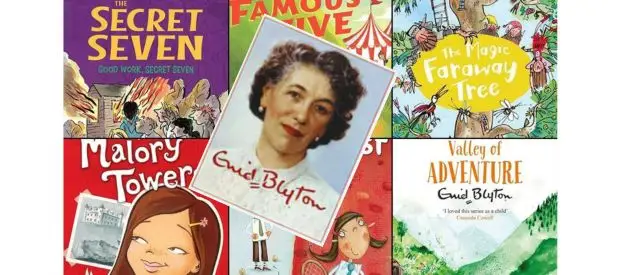
That author is Enid Blyton.
Her books didn’t need fantasy because they gave us something more real. Her worlds were recognisable. Her characters were children like us. They had picnics, went camping, rode bikes, and stumbled upon smuggling rings or missing jewels. They solved mysteries and went on real adventures, and most importantly, they did it together.
That sense of camaraderie, curiosity and courage spoke to me in a way no other books did at the time. Enid Blyton gave me my first proper taste of adventure fiction. She showed me that real-world settings could be every bit as magical as otherworldly ones, provided they were written with heart, pace and purpose.
A Noddy Introduction
My earliest memory of Enid Blyton actually has very little to do with adventures or mysteries. It begins with a little wooden toy named Noddy.
When I was four or five, my mum would often read to me from a very colourful Noddy book. I can still picture it clearly: bright pages, bouncy language, and lots of mischief from characters like Mr Plod and Big Ears.
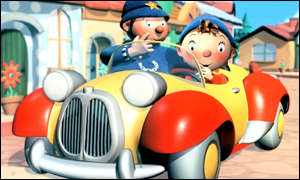
I adored it. But what’s more, I remember the way my mum loved it too. She’d watched the original Noddy series on TV, and when I was little, I watched it as well. In many ways, Noddy was my first friend in fiction, and like a lot of Blyton’s characters, he was curious, loyal, and often got things a bit wrong before getting them wonderfully right again.
That early experience taught me something important before I even knew I wanted to be a writer: that stories don’t just entertain children, they connect generations. A good children’s story speaks to the young and the young-at-heart.
Escaping with The Famous Five
As I got older, I discovered Blyton’s longer books, particularly The Famous Five series. This, for me, was where the magic truly began.
I read every single one. Cover to cover. I loved them all.
From Five on a Treasure Island to Five Go Off in a Caravan, I couldn’t get enough. Julian, Dick, Anne, George and Timmy the dog became close friends of mine, in the same way you might cling to a favourite group of classmates. I’d re-read the stories, sometimes swapping which character I wanted to be that day. But George was always my favourite. She was brave, headstrong, and didn’t care what others thought. She had grit.
Reading, at the time, wasn’t always considered “cool”. In fact, at school, it was often seen as a bit nerdy. The sporty kids and the louder ones didn’t really talk about books. But I didn’t care. Reading these stories was pure escapism. I felt like I was part of the adventure. I wasn’t just reading about a mystery on Kirrin Island—I was there, with a torch and a sandwich in my rucksack, helping to solve it.
These books were my first taste of “real” fiction. Not in the sense that everything was perfectly plausible, but in that the world felt recognisable. Unlike Narnia, this was our world. Unlike Dahl, there was no hint of exaggeration or magical potions. The Famous Five could be us. That made all the difference.
Famous Five or Secret Seven?
There’s often a friendly debate between Blyton fans about which is better: The Famous Five or The Secret Seven.
For me, it was never even close. I was a Famous Five child through and through.
The Secret Seven stories were good—clever, engaging and shorter—but there was something about the Famous Five that stuck. Perhaps it was the coastal settings, the slightly older characters, or the independence they were given. They just felt more alive, more layered, and more exciting.
I think what really cemented it for me was how self-sufficient they were. They didn’t rely on adults. They trusted each other. They had that all-important bond of friendship that children crave in fiction and in life. Their adventures were often prompted by nothing more than curiosity and a good hike. That was enough.
In my writing today, I often reflect back on that. Children love action, yes, but more than that, they love connection. They want to see characters work as a team. They want to feel part of something.
Enid Blyton understood that instinctively.
Mystery, Mischief and Morality
One of the many things Blyton taught me is that children love a good mystery.
They want to find out who did it, why they did it, how the clues fit together, and what will happen next. It doesn’t need to be complicated. It just needs to be satisfying.
Blyton was a master of structure. She had a gift for knowing exactly when to drop a clue, when to up the tension, and when to let her characters have a good old-fashioned squabble. Her books move at the perfect pace for young readers. There’s always a secret passage, a suspicious character, a stormy night, or a vital piece of evidence hidden under a floorboard.
What I learned from reading those stories, often late into the night with a torch under the duvet, is that children want to think. They want to be challenged. They want to feel clever. Blyton gave them that.
She also gave us just enough peril. Not the kind that keeps you up at night, but the kind that makes your heart race a little. Perhaps the gate is locked, or someone’s been watching the children from the cliffs. Nothing too terrifying, but just enough to pull you in.
And through it all, she gave her characters a strong moral compass. They made mistakes. They argued. They got lost or led astray. But they always found their way back, usually with some sandwiches, ginger beer, and a jolly good apology at the end.
What I Learned as a Writer
Looking back, I realise now that Enid Blyton taught me more than just how to enjoy a story. She taught me how to write one.
Here are just a few things I’ve carried into my own work:
- Children need strong characters they can trust, laugh with, and rely on.
- Adventure doesn’t need to be magical; it just needs to be exciting.
- Mystery engages the mind, even for young readers.
- Structure matters. Clarity of plot makes everything else work.
- Friendship drives the story. If the characters care about each other, the reader will care too.
This is especially true in Space Ranger Fred. While it’s a far cry from the English coast, the heart of it—the teamwork, the courage, the laughter—is absolutely rooted in the same spirit I first found in Blyton’s work.
A World Without Mobile Phones
Something else worth mentioning is how much I loved the freedom the Famous Five had. They could disappear for the day without being tracked by a mobile phone. They packed their own food, pitched their own tents, and solved real problems without an adult in sight.
That sense of autonomy is something modern children still crave, even if society has become more protective. I believe it’s one of the reasons Blyton’s books have endured. They give children a taste of independence, wrapped in safety and imagination.
As a child, reading those books made me feel trusted. As a writer, it reminds me not to coddle my audience. Children are capable. They’re brave. And they want to feel those things in the books they read.
Reading Is for Everyone
I also feel it’s important to touch on how reading was perceived when I was growing up.
As I mentioned earlier, it wasn’t always “cool” to be seen with a book in your hand at school. Reading for pleasure was often labelled as something nerdy or antisocial. And yet, I couldn’t get enough.
What Enid Blyton gave me, perhaps more than anything, was a quiet place to be myself. A place where adventure was waiting, where kindness and cleverness mattered, and where books were windows into whole other lives.
For children like me, who didn’t quite fit the mainstream mould, her books were a gift. And they still are.
Thank You, Enid Blyton
Thank you for Noddy, the colourful wooden toy who helped me fall in love with reading.
Thank you for George, who showed me that being different was a strength.
Thank you for Julian, Anne, Dick and Timmy, who made every summer holiday feel like an adventure waiting to happen.
Thank you for letting me solve mysteries before bedtime, for teaching me how stories work, and for making reading a joy rather than a chore.
Thank you for creating a world that felt real enough to believe in, but exciting enough to escape into.
Coming Next in the Series:
How Wilbur Smith opened the door to big adventures, bold characters, and the kind of stories my dad read—until I pulled them off the bookshelf for myself.
Stay tuned.
About the Author
Matt Newnham is a British children’s author, speaker, and creative thinker. He is the author of Space Ranger Fred,, and other imaginative stories that help children dream, smile and see themselves in the stories they love. His writing is shaped by the books he grew up with and the belief that adventure and imagination are for everyone.
Based in the UK | matt@mattnewnham.com | www.mattnewnhamauthor.com
Instagram: @mattnewnhamauthor

Leave a Reply