
There is a strange kind of guilt that follows a writer on holiday. It’s like a shadow in your suitcase, wedged between the suncream and the paperbacks. It creeps up when you’re watching the waves or enjoying a cream tea and whispers, “Shouldn’t you be writing?” But let me tell you something I’ve learned. After just taking ten whole days off in St Ives, Cornwall, that little voice can be ignored. And more than that, it should be.
Writers, just like anyone else, need a break. A proper one. A step-back-from-the-keyboard, log-off-the-emails, close-the-laptop kind of break. Because when we do, something magical happens. Our brains, weary from crafting plots and editing sentences, find room to breathe. Our imaginations, overworked and overcooked, stretch their legs. And we return sharper, calmer, and more creatively charged than before.
Welcome to St Ives
There is something restorative about Cornwall, and St Ives in particular. The cobbled lanes, the golden beaches, the seagulls that will quite literally fight you for a pasty. It’s a place that has long attracted artists and writers. You can see why. The light is different there. Softer. More forgiving.
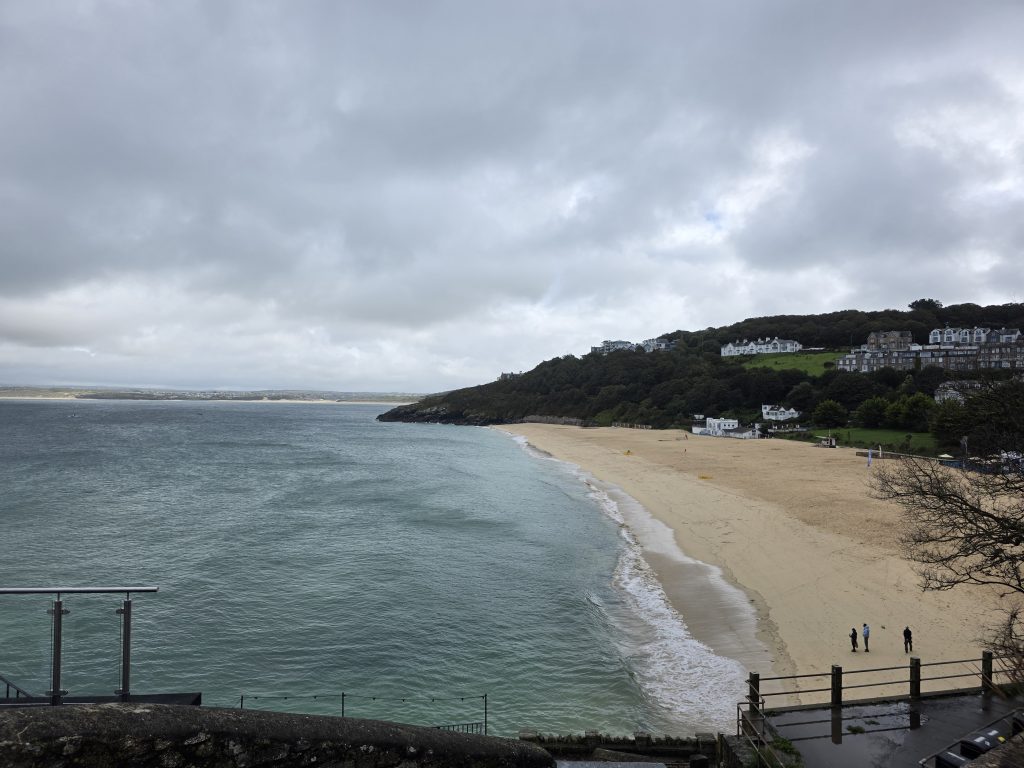
I didn’t take a notebook. Well, I did, but it stayed closed for most of the trip. I didn’t plan to write. I planned to stop. To just be. Mornings were slow. Coffee with a sea view. Walks along the coastal path. Evenings of good food, tired legs, and proper belly laughs. The kind of holiday that doesn’t rush you but invites you to stay in the moment.
The Creative Reset
We often talk about writer’s block like it’s a sudden affliction, but sometimes it’s just burnout in disguise. The truth is, our minds can only give so much before they demand rest. And yet, we push on. We chase word counts, deadlines, and inspiration like it’s a finish line. But taking a break is not the same as giving up. It’s part of the process.
In Cornwall, I noticed things I would normally overlook. The way the tide creeps in. The colour of light on wet sand. How the wind makes toddlers laugh and dogs bark with glee. These little details find their way into stories. Not because I was writing them down, but because I was noticing again.
The Importance of Doing Nothing
We live in a world that glorifies busy. As writers, we feel the pressure to always be producing. Another chapter. Another article. Another pitch. But sometimes, doing nothing is doing everything. Because in the silence, your characters start to speak. In the stillness, plot twists appear like driftwood washed ashore.
Taking time off, properly off, is like watering your creative roots. You might not see the growth immediately, but it’s happening underground. Quietly. Powerfully.
Space Ranger Fred Can Wait
Don’t get me wrong. Space Ranger Fred is calling. There’s another adventure to write, another reel to post, more stories to create. The Christmas special won’t write itself, and the video game pitch is looming large. But Fred can wait. Because I’ve learned the hard way that running on empty doesn’t do him any favours.
Sometimes, the most productive thing a writer can do is step away. And that’s exactly what I did.
Writing Isn’t Just Typing
It’s easy to think that if we’re not typing, we’re not working. But writing happens long before fingers hit the keyboard. It happens when you’re walking the beach, watching the sunset, or staring into the foam of a cappuccino. Ideas brew slowly. Stories take root in quiet places.
In St Ives, I wasn’t writing. But I was dreaming. Imagining. Refuelling. And that, my fellow writers, is work too.
Guilt-Free Downtime
One of the hardest things to accept as a creative is that rest is part of the job. You don’t need to earn it by overworking. You don’t need to justify it with productivity. You just need to allow it.
I gave myself permission to rest. To laugh more than I scrolled. To read for fun rather than research. To swap plot twists for clotted cream. And I came back lighter. Happier. More inspired.
Lessons from the Coast
So what did ten days in Cornwall teach me?
- Imagination loves space. Cluttered minds write cluttered stories. Give yourself mental room.
- Nature is a brilliant storyteller. Watching waves can teach you more about rhythm than a writing course.
- Slow is not lazy. Slow is mindful. And mindfulness makes for better writing.
- You are not a machine. Even laptops need to shut down. So do you.
- Joy feeds creativity. The more joy you soak in, the more you have to pour out onto the page.
Coming Home
Now I’m back, and the to-do list is long. Space Ranger Fred is waving his red space boots at me. Emails need replying. Documents need drafting. But I feel ready. Not panicked. Not exhausted. Ready. Oh, and there are two long-haul trips to take!
Taking time off didn’t take me away from writing. It brought me back to it. With fresh eyes. A rested mind. And a heart full of sea air and memories.
If you’re a writer who hasn’t taken a break in a while, consider this your permission slip. Go. Rest. Unplug. Your characters will be waiting when you return. And they’ll be all the better for it.
Final Thoughts
The writing world is noisy. Full of shoulds and musts and “Are you writing today?” But the real magic often happens in the quiet moments. When you let yourself be still. When you let the sea remind you how small and beautiful and wild life really is.
So take the break. Have the cream tea. Walk the coast. Laugh until your ribs ache. And when you come back, bring the stories with you.
Because rest isn’t a distraction from the writing life. It’s what makes it possible.

Leave a Reply