
Fridays are funny things. By the time we get to them, we’re often running on fumes, counting down to the weekend. Many Fridays are this way and I am craving a lie-in or a breather. But today feels different. It’s a Fabulous Friday. Not because something perfect happened (although my coffee was quite good this morning), but because I’ve finally stopped to reflect on a moment that nearly never happened at all: the moment I decided to write Space Ranger Fred and the Shoelace Adventure.
And to think…it nearly didn’t happen.
The Idea That Hid in My Head
I can’t tell you how many notebooks I’ve filled with story ideas. Some are scribbled in margins, some typed at 2 a.m., others jotted down on napkins, receipts, and the backs of shopping lists. Most of them sit quietly, waiting to be noticed again. One day, Buy me a coffee and I’ll publish one or two of them.
Space Ranger Fred was just such an idea. A boy, a dog that might not even be dog, a galaxy full of mess and mayhem. A love of exploration. A curious mind. A few sparks of humour. That’s all it started with. No publisher. No animation deal. No game developers. Just a loose thread of a thought, pulled from somewhere between nostalgia and starlight… oh and a request to write a story about Space for an Australian School Teacher.
But here’s the truth: I nearly didn’t write it. I didn’t think it was good enough. I wrote two, one to give to the teacher and make $15 and the other… well, the other ended up in the black hole many authors possess called a hard drive.
The Voice of Doubt
Writers, parents, teachers, really, all of us, know that little voice. The one that pipes up just when we feel the faintest flicker of inspiration:
- “It’s been done before.”
- “Who do you think you are?”
- “Kids want something cooler.”
- “This isn’t educational enough.”
- “This isn’t serious enough.”
It’s the same voice that stalls creativity, that edits before the sentence even forms. And for a long time, I let it win. I left Fred floating in limbo, half-formed in my imagination, held hostage by the idea that the story just didn’t matter enough.
But then something shifted.
STEM + Storytelling: A Realisation
The turning point for Fred came at a time when I had nothing. I was homeless, sleeping on a friend’s couch, surrounded by my boxes and the last dregs of belief in myself. I’d scribbled a few silly ideas for a children’s book onto scrap paper. One of those ideas involved a boy, a dog, a rocket, and an awful lot of jelly. That was it. It didn’t feel like much. I didn’t feel like much.
Then something magical happened.
A friend’s daughter—she must have been about ten—found the loose pages in a box one rainy afternoon. She read them, giggled, and brought them to her mum.
“Mum, this is brilliant,” she said.
Her mum agreed.
That moment those words were like someone turning the light back on. I saw Fred, not just as an idea, but as a possibility. A spark. A story that could actually matter.
About a year later, I visited a local school to talk about books. Not Fred, just books in general, what it’s like to be a writer, how stories come to life, why reading matters. After I had read in school assembly, a teacher pulled me aside and said, “The kids need stories that make learning fun. There’s loads of textbooks, but not enough adventure.”
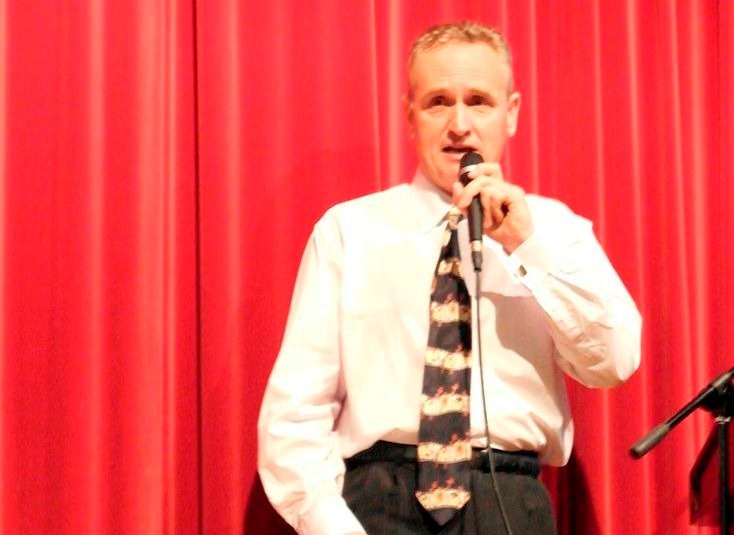
That line stuck with me. Not enough adventure.
Because what is science and learning, if not an adventure? What is curiosity if not a form of bravery? Children ask the biggest questions of all:
- How do planets stay up?
- What happens if you fall into a black hole?
- Can dogs wear space helmets?
- Are there toilets in space?
The teacher’s comment circled my thoughts. By now I had found a place to call home, I sat on my second hand couch, pulled out my old stories, and read them aloud again. Silly. Scrappy. Undeniably fun. I guess this was where and when the second book was conceived Space Ranger Fred and the Umbrella Rescue.
And underneath all the silliness? STEM. The science was there all along. It just wasn’t dressed in lab coats or whiteboards. It was wrapped in rain-soaked space adventures, gravity magnetic tow ropes and crazy things that only kids can dream of.
What Fred Really Represents
Fred is, at his core, a problem-solver. He makes mistakes. He figures things out. He experiments. He fails. He tries again. He asks questions. He listens. And slowly, I realised that he’s the very definition of a STEM learner.
- Science: He explores new planets and discovers strange phenomena.
- Technology: Simple things become hi-tech PEG – Powerful Everything Gripper – a peg taped to a chair!
- Engineering: He fixes things or string does what computers do on earth.
- Maths: Clocks count, distance is measured… not always correct..
But Fred doesn’t feel like a STEM character, and that’s the magic. Children don’t want a lesson. They want a story. And if they learn about gravity or propulsion or teamwork along the way? Even better.
From Doubt to Delight
Once I gave myself permission to write Space Ranger Fred, not for a market, not for a brief, not for a publisher, but for the child I once was, the story poured out.
It was messy. It was joyful. It was full of weird space snacks and malfunctioning simple tools. But it worked. Because it had heart.
I tested the first chapters with a few children I knew. One parent messaged me to say, “My son now wants to invent a gravity-defying scooter.” Another told me her daughter had drawn up blueprints for a spaceship made entirely of recycled milk cartons. I never asked for anything like this!
That was the moment I knew. Fred didn’t have to be perfect. He just had to be real in the minds of kids.
What Parents and Teachers Told Me
After releasing Fred into the world, first as a book, then into classrooms and libraries, I began hearing the same things:
- “Fred helped my child realise that it’s okay to mess up.”
- “He sparked a love of space in my daughter.”
- “My class wouldn’t stop talking about Space Rockets.”
Teachers began using Fred to supplement science lessons. Parents were using bedtime stories to have breakfast conversations about energy sources and Mars habitats.
And all I could think was: What if I’d never written it?
Why Fabulous Fridays Matter
So why call this a Fabulous Friday? Because today I remembered that joy comes from doing the thing you were almost too afraid to do. That a story you nearly abandoned can become a spark in someone else’s world.
Fridays are a chance to reflect. To breathe. To recognise what you’ve overcome. And to plan what comes next.
For me, that means more Fred. More stories. More ways to blend laughter with learning. It means trusting the weird ideas. Letting curiosity take the lead.
And it means telling you—whether you’re a writer, teacher, parent, or just someone holding onto a quiet idea—that it might be time to stop doubting and start doing.
Because that story? The one you’ve been too unsure to start? It might just be the one a child needs.
What’s Next for Fred?
We’ve come a long way from a scribbled idea in a scrappy notebook. Fred’s off to bigger things: animation, interactive storytelling, and a video game built around science missions and space puzzles.
But no matter how far Fred travels, he remains grounded in the values that sparked him: wonder, resilience, imagination, and a good dose of jelly.
Final Thoughts for Grown-Ups Who Care
If you’re a parent wondering what to read next, or a teacher searching for a new way to light up your lesson plan, I hope Fred finds a place in your world. He’s silly, sure. But he’s got purpose.
And if you’re someone like I was—sitting on an idea you’re too afraid to believe in—I hope this post serves as your own Fabulous Friday signpost. The world needs your story.
Write it. Share it. Launch it into the stars.
Until next time, Matt
About the Author
Matt Newnham is a UK-based children’s author, copywriter, and creative storyteller passionate about inspiring young minds through imaginative and meaningful stories. With a background in publishing, self-publishing, and marketing, Matt combines heart, humour, and purpose in every tale he tells. Discover more at mattnewnham.com or connect on LinkedIn and Instagram.
