How Watership Down Taught Me That Storytelling Isn’t Just About Rabbits
Some books settle in the imagination and never leave. They burrow deep into your thinking, your feelings, your creativity, and your soul. Watership Down by Richard Adams is one of those books for me. I first read it in my early teens, and it did something most books hadn’t quite managed up to that point: it gave me a completely immersive world that felt simultaneously like a dream and a wake-up call.
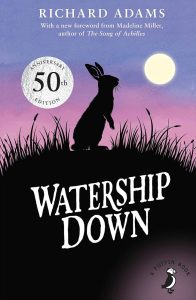
It is a story about rabbits, yes. But as most people who have read it will tell you, it is really a story about life, leadership, survival, belief, trauma, community, and freedom. And for a boy with a vivid imagination and a deep curiosity about the world, it opened my eyes to the power of metaphor, allegory, and worldbuilding done right.
I still carry the lessons of Watership Down with me. In fact, you could say the book played a pivotal role in shaping how I write today. Even more so now, as I work with William Smith to adapt my Space Ranger Fred books for animated television, I realise how much Adams’ storytelling approach influences my own.
Let me explain.
A Story That’s Not Just a Story
When you first describe Watership Down to someone unfamiliar with it, it sounds almost silly. A group of rabbits leave their warren to escape destruction and set out on a journey to find a new home. Along the way, they face predators, dangers, internal conflicts, and encounters with other rabbit societies – including one that’s downright dystopian.
But Richard Adams never talks down to the reader. He treats these rabbits with a seriousness and dignity that demands attention. They have language, mythology, politics, and philosophy. They have fears and dreams. And because of this, you never once think of them as just animals. They are characters – rich, emotional, and layered.
That’s what stuck with me. That stories can be symbolic without being preachy. That fantasy can be rooted in truth. And that readers, even children, can handle complexity.
The Movie That Gave Me Nightmares (and Inspiration)
Like many people my age, I also saw the 1978 animated film adaptation. And like many, I found it haunting. It is not a sanitised version of the book. It doesn’t flinch from the violence, the fear, the death. And it certainly doesn’t water down the darker themes.
I remember watching it and being both disturbed and enthralled. It was proof that animation wasn’t just for silly, colourful fun. Animation could move you. It could unsettle you. It could make you think.
And that, weirdly enough, is one of the thoughts I come back to now as I work with William Smith on Space Ranger Fred. We’re not making something quite so intense, but the same principle applies: don’t underestimate the emotional power of animated storytelling. Kids are smarter than we give them credit for. If you craft your story with care, honesty and a bit of boldness, it resonates. It stays.
“Bright Eyes” and That Haunting Feeling
We cannot talk about the Watership Down film without talking about the song. “Bright Eyes” by Art Garfunkel. Beautiful, eerie, unforgettable. That song carries a strange emotional weight. It’s melancholy. It’s hopeful. It’s… something in between.
The song added a depth to the story that made it feel almost sacred. It made the emotional stakes feel real. And it taught me something important as a writer: stories are more than words. Tone, imagery, music – they all matter. They shape how the reader (or viewer) feels.
As I work through each draft of my own stories, whether written or adapted, I think a lot about tone. I want the story to entertain, yes. But also to linger. To stay in the mind long after the last page or final scene.
Seeing Animation as a Natural Evolution
One of the odd things about how I write is that I often “see” the scenes play out like animation in my head. It has always been that way. Dialogue, action, humour – it all arrives as moving images in my imagination. So when I started writing children’s books, and later developing them into scripts, it didn’t feel like a stretch.
Watching Watership Down years ago was the first time I saw a story leap from book to animation in a way that kept its soul intact. That’s what I’m hoping we achieve with Space Ranger Fred. Something that respects the original, adds dimension, and maybe even sparks imagination in a few young minds out there.
Working with William Smith and the wider team has been an exciting challenge. Every detail matters – from voice to movement, from character expression to comic timing. Animation is storytelling at its most intricate. But also, when done well, its most rewarding.
Lessons from Hazel, Fiver, Bigwig and the Rest
Every character in Watership Down represents something more than just their role in the group. Hazel is leadership grounded in kindness. Fiver is intuition and faith. Bigwig is strength tempered by loyalty. General Woundwort is tyranny fuelled by trauma. And the different warrens – from Sandleford to Efrafa – show us the many ways societies can work, or fail.
These metaphors are woven so naturally into the story that you can read it on many levels. As a young reader, I just enjoyed the adventure. As I got older, I saw the bigger picture.
That dual-layer storytelling – accessible to children, meaningful to adults – is something I’ve tried to bring into Space Ranger Fred. It’s not about copying. It’s about carrying forward the same respect for the reader. The same belief that stories can be fun and important. Silly and sincere.
Metaphors That Mirror the Real World
Looking back now, it’s clear that Watership Down taught me a lot about how to write without directly instructing. The themes – survival, the environment, dictatorship, migration, community – are all still relevant. Maybe more so than ever.
But Adams didn’t wave a flag. He didn’t put these messages on a billboard. He let the story show you. He let you feel it. And that’s where the power lies.
It’s a lesson I keep reminding myself of: let the story do the talking. Let the world breathe. Let the characters show you what they need. Don’t force it. Trust the reader.
From the Downs to the Stars
It might seem odd to go from rabbit warrens to intergalactic adventures, but there’s a thread that connects them. Watership Down and Space Ranger Fred both start with a central character faced with a huge unknown. Both are about finding your place in the world. Both are full of odd friends, impossible odds, and the kind of humour and hope that keeps you going.
When I was writing Space Ranger Fred and the Great Galactic Bake-Off, I realised that even the most outrageous story benefits from quiet truth. And Watership Down is full of quiet truth.
Rabbits may not build spaceships. But they build belief. And belief is powerful.
My Own “Bright Eyes” Moments
There are moments in my own writing when I feel it – that emotional swell. That ache of a good scene. It’s what I call my “Bright Eyes” moments. The scenes where you feel something real, even in the middle of the madness. And every time that happens, I tip my hat to Richard Adams.
Because if I can make one child, or one adult, feel what I felt the first time I read Watership Down or heard that song, I’ll count it as a win.
Thank You, Richard Adams
Few books stay with you across the decades. Fewer still grow with you. Watership Down is one of those books. I return to it occasionally, and it still feels fresh. Still feels wise.
Thank you, Richard Adams. For the courage to write something so different. For proving that children’s literature can be deep, dark, and beautiful. For showing me that metaphor can be magic.
And thank you for reminding me that animation is a doorway, not a downgrade. A way for stories to reach further. To live again.
Coming Next in the Series
How Shakespeare’s Macbeth, first studied reluctantly at school, slowly revealed its genius to me over time – and helped me understand the power of words, ambition, fate, and the shadow we all wrestle with.