
How Shakespeare’s Macbeth Unlocked the Power of Language, Ambition, and the Shadows We All Wrestle With
At school, Shakespeare felt like a chore. That might sound strange coming from someone who now writes for a living, but it’s true. My first encounter with Macbeth wasn’t love at first sight. It was confusion. Strange words, old-fashioned phrasing, long speeches that seemed to loop around without getting to the point. I sat in class, following along, trying to act interested, while really wondering why we couldn’t just read something easier.
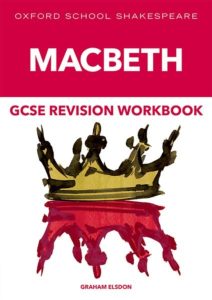
But something happened. Not all at once, and not without resistance. But over time, Macbeth started to get under my skin.
What began as reluctant study eventually became a kind of obsession. I began to realise that the language I found awkward was actually finely crafted poetry. That the characters I thought were stiff were full of turmoil, passion and power. And that the story – full of ambition, fate, guilt, and prophecy – wasn’t just a dusty old drama. It was a mirror.
First Impressions: Struggling Through the Bard
Let’s be honest. When you’re fifteen, and you’re told to read a centuries-old play in a classroom, it’s not likely to win you over. You’re more focused on getting through it than understanding it. At first, I was no different.
My copy of Macbeth was marked with scribbles and underlining from various teachers. We read it aloud, line by line, and I remember being more concerned about not embarrassing myself in front of my classmates than actually absorbing the plot. I got the gist. A brave general, some witches, a mad queen, and a lot of blood. But the depth? That escaped me.
It was only much later – after school, after time, after life had handed me some of my own hard lessons – that I came back to Macbeth and saw what I’d missed.
The Genius in the Words
Once you break through the barrier of the language, you discover how precise and powerful Shakespeare really was. Every line in Macbeth carries weight. The imagery is loaded, the rhythm of the verse deliberate, the metaphors haunting.
“Out, out brief candle…”
“Is this a dagger which I see before me…”
“Tomorrow, and tomorrow, and tomorrow…”
These lines don’t just live in the play. They’ve bled into our culture, into everyday language, into how we express grief, ambition, doubt. They are timeless. And when you finally hear them not as ‘homework’ but as real speech from characters in agony or ecstasy, something shifts.
Shakespeare didn’t write to show off. He wrote to reveal. He wanted us to see ourselves in his characters – in their greed, fear, joy, and regret. Macbeth’s journey is a warning and a tragedy, but it’s also deeply human. Who hasn’t been tempted? Who hasn’t questioned their choices?
Macbeth the Man: Ambition and Consequence
One of the reasons Macbeth endures is because it tackles ambition in a raw, brutal way. Macbeth isn’t evil at the start. He’s brave, loyal, respected. But then come the witches. The prophecy. The seed of an idea. And that seed, once planted, grows quickly.
Macbeth shows us what happens when ambition goes unchecked. When the pursuit of power overtakes morality. And in doing so, it asks big questions: Are we masters of our fate? Or are we just pawns of destiny?
When I reflect on my own writing journey, I see echoes of this. Not the murderous kind, obviously, but the wrestling with purpose, direction, and doubt. Writing is filled with ambition. The ambition to say something that matters. To be heard. To make your mark. And with that comes self-doubt, fear of failure, and the risk of pushing too hard.
Macbeth became a kind of compass. A reminder of how easily we can lose ourselves when we don’t check our motivations.
Lady Macbeth: Guilt, Gender and the Human Psyche
It would be impossible to talk about Macbeth without talking about Lady Macbeth. Her character fascinated me then, and fascinates me still. She begins as the stronger of the two, urging her husband to act, challenging his masculinity, pouring her own ambition into him.
But it’s her unraveling that struck me most on re-reading. Her descent into guilt, her sleeplessness, the infamous hand-washing scene – it’s all so raw. So real. And again, Shakespeare doesn’t spell it out. He shows it, through small actions, snippets of speech, and silence.
“Out, damned spot!” is more than a line. It’s a cry from the soul.
When I write characters now, I often come back to Lady Macbeth. She’s proof that characters don’t have to be likable to be compelling. That contradictions make people interesting. And that strength and vulnerability can live side by side.
The Supernatural: Witches, Fate, and the Unknown
At school, I thought the witches were just spooky extras. A bit of theatre. Now, I see them as something much more. They represent uncertainty. Chaos. The unknowable forces that tug at the edges of our plans.
Their words are cryptic, but they drive the entire plot. They don’t tell Macbeth to kill the king. But they plant the idea. And once the idea is there, the damage is done.
In my own writing – especially in Space Ranger Fred – I often include strange, unpredictable elements. A mysterious character, a strange object, a confusing clue. And I realise now that Shakespeare did the same. Not everything has to be explained. Sometimes mystery itself is the point. It keeps us thinking.
The Shadow Within Us All
As I’ve got older, Macbeth has become less a play about kings and castles, and more a story about inner conflict. About the shadow we all carry. That part of us that wants more, fears judgement, wrestles with guilt.
Carl Jung called it the “shadow self” – the part of our psyche that we suppress, deny or ignore. Macbeth’s journey is a full confrontation with that shadow. And the result is devastating.
But it’s also enlightening. Because it shows us what can happen if we don’t acknowledge that part of ourselves. If we pretend it’s not there.
In writing, this has made me braver. More willing to explore the uncomfortable. To let my characters be flawed. To ask difficult questions. Because that’s where the truth often lives.
From the Classroom to the Page
Looking back, I’m grateful we studied Macbeth in school, even if I didn’t appreciate it at the time. It laid a foundation. It taught me to listen more carefully. To pay attention to structure, rhythm, subtext.
It also reminded me that not everything has to be understood immediately. Some books – some ideas – take time to grow.
Today, I often draw on what I learned from Macbeth in my own work. Not just in style, but in courage. Shakespeare wasn’t afraid to tackle darkness. To make audiences uncomfortable. To show that power and ambition can destroy, but also reveal.
And for that, I thank him.
The Power of Words
Ultimately, Macbeth taught me that words matter. That how you say something is just as important as what you say. And that stories – especially ones that stand the test of time – have a kind of alchemy to them.
Shakespeare’s words have lasted because they cut to the core. They bypass trends and speak to the eternal human experience. Ambition. Love. Betrayal. Guilt. Fate. It’s all there, in verse that still stings and sings.
As a writer, that’s the gold standard. Not to mimic, but to aspire. To use words that carry weight. To tell stories that mean something.
Coming Next in the Series
How The Three Investigators sparked my love for mystery and adventure..
