How Whizzer and Chips Fed My Love of Storytelling Through Silliness, Slapstick and Pure Chaos
Before the novels, before the fantasy worlds, before I had any idea what “structure” or “character arcs” meant, there were comics. Loud, colourful, chaotic comics that made absolutely no sense at times and yet made perfect sense to a child.
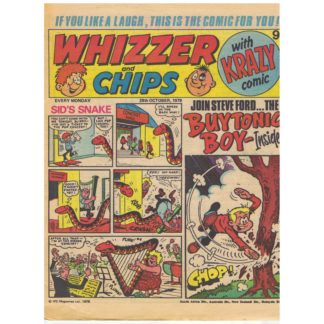
For me, one of the standouts was Whizzer and Chips.
It wasn’t just something I read. It was something I looked forward to. Something that arrived and immediately grabbed my attention, pulled me in, and refused to let go until I’d worked my way through every strip, every joke, every ridiculous panel.
And looking back now, I can see just how important those comics were.
They didn’t just entertain me. They shaped how I think about storytelling.
A Different Kind of Reading
Whizzer and Chips wasn’t like the books I’d read. It didn’t have long chapters or slow build-ups. It didn’t ask for patience. It delivered instantly.
You opened it and you were straight into the action. Visual gags. Silly characters. Absurd situations. Everything was exaggerated, fast, and unapologetically fun.
There was no need to “get into it”. You were already in.
And for a young reader, that matters. It taught me that storytelling doesn’t always have to be slow or serious. It can be immediate. It can be bold. It can be ridiculous.
That lesson has stayed with me ever since.
The Power of Being Silly
What I loved most about Whizzer and Chips was how unashamedly silly it was.
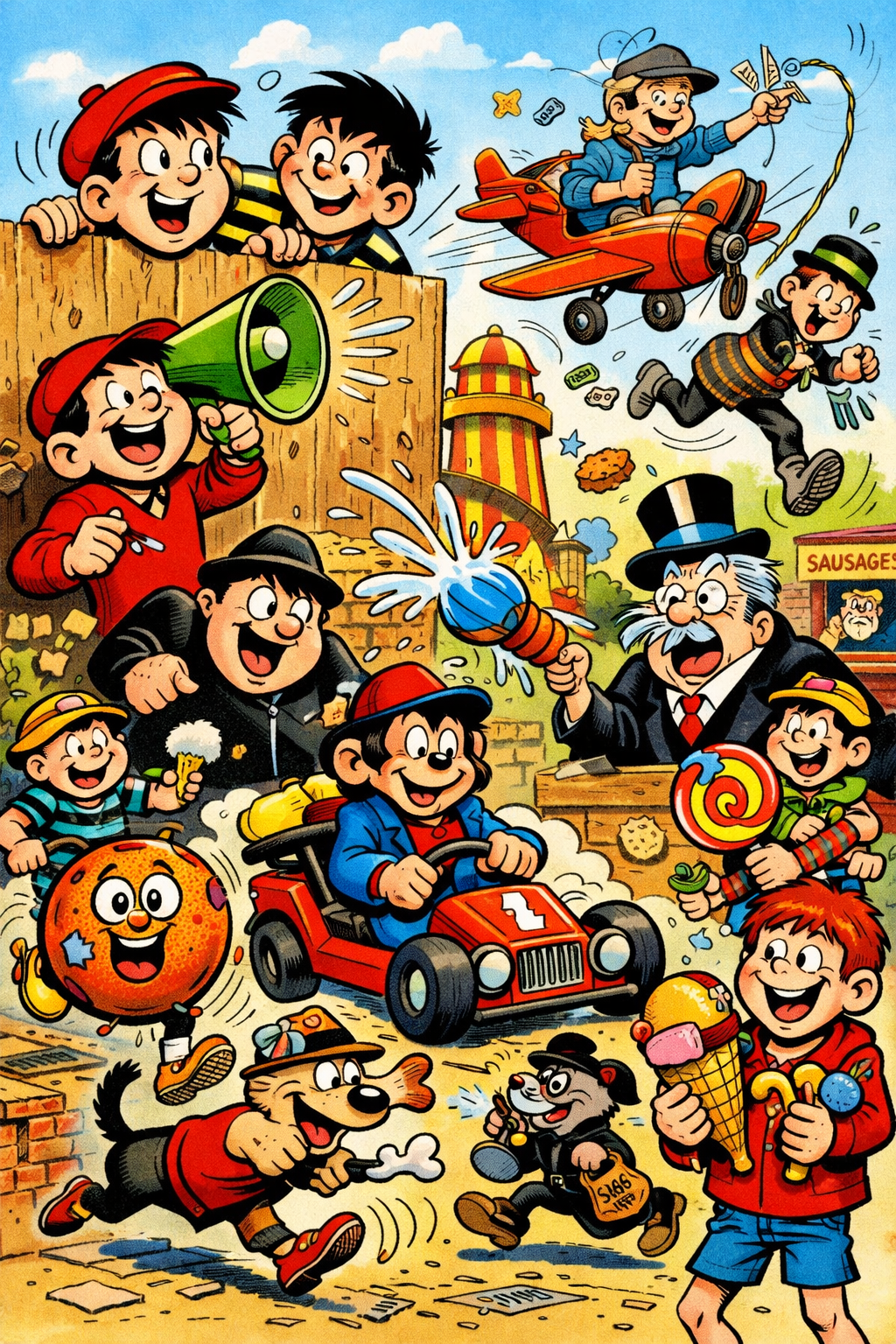
Characters got flattened, stretched, exploded, chased, tricked and humiliated. Things went wrong constantly. Authority figures were often clueless. Kids were clever, cheeky and always one step ahead.
There was something very British about it. That slightly irreverent tone. The willingness to poke fun at everything. The idea that humour didn’t need permission.
And as a kid, that was freeing.
It told me that stories didn’t have to be perfect. They didn’t have to be polite. They just had to be engaging.
That sense of freedom is something I try to bring into my own writing. Especially with Space Ranger Fred. There are moments of chaos, moments where things go wrong in spectacular ways, moments where the humour takes over. And that all traces back, in part, to those early comics.
Visual Storytelling Before I Knew What It Was
At the time, I didn’t think about it. I just read and laughed.
But now, I can see that Whizzer and Chips was teaching me visual storytelling long before I knew the term.
Each strip had to work quickly. Set-up, escalation, punchline. Often in just a few panels. Every image mattered. Every expression carried weight. Timing was everything.
You didn’t have paragraphs to explain things. You had to show it.
That’s a powerful skill. And it’s one that translates directly into how I now write scenes.
When I write, I often see the action play out in my head like a comic strip or a piece of animation. Quick beats. Clear visuals. Strong reactions. That rhythm, that pacing, was shaped early on by comics like Whizzer and Chips.
Characters You Never Forget
The characters in Whizzer and Chips were larger than life. Exaggerated, ridiculous, sometimes completely nonsensical. But they were memorable.
And that’s the key.
You didn’t need deep backstories or emotional monologues. You needed a strong idea and consistent behaviour. A character who always reacted in a certain way, always pushed things too far, always got into trouble.
That consistency made them funny. It also made them stick.
As a writer, I’ve learned that memorable characters don’t always need complexity first. They need clarity. Who are they. What do they do. Why do they matter.
Once you have that, you can build depth. But the foundation is what makes readers come back.
Chaos With Structure
On the surface, Whizzer and Chips felt chaotic. Anything could happen. And often did.
But underneath that chaos was structure.
Each strip had a rhythm. A logic. Even the most absurd situations followed a pattern. Set-up, build, twist, payoff.
I didn’t see it at the time. I just enjoyed it.
But later, when I started writing properly, I realised I already understood some of those fundamentals. Not because I’d studied them, but because I’d absorbed them.
That’s the power of reading widely, especially as a child. You pick up skills without realising it.
From Comics to Books
It might seem like a leap from Whizzer and Chips to writing books, but for me, it was a natural progression.
Comics taught me pace. They taught me humour. They taught me how to grab attention quickly.
Books like Narnia, The Belgariad, Watership Down, and others added depth, emotion, and scale.
But the foundation of storytelling, the instinct to entertain, to keep things moving, to make people smile or laugh, that was already there.
And I owe a lot of that to those comics.
Why It Still Matters
We often talk about “proper books” as if they’re the only valid starting point for readers or writers. But that’s not true.
Comics matter.
They get kids reading. They build confidence. They show that stories can be fun, immediate and accessible. And they quietly teach structure, pacing and character in a way that feels effortless.
I’d argue that without Whizzer and Chips, I might not have developed the same instinct for storytelling. I might have taken things too seriously, too early.
Those comics reminded me that storytelling is supposed to be enjoyable. For the reader and the writer.
Bringing That Spirit Forward
Even now, when I sit down to write, I try to hold onto a bit of that comic-book energy.
Not everything has to be heavy. Not everything needs layers of meaning. Sometimes a well-timed bit of chaos, a funny moment, or an unexpected twist is exactly what a story needs.
That balance between fun and substance is something I’m always working on.
And when it works, when a reader laughs or gets caught up in the moment, I know I’m tapping into something that started all those years ago with a weekly comic.
Thank You, Whizzer and Chips
It might not be the most obvious influence. It doesn’t carry the same weight as Shakespeare or the scale of an epic novel.
But it matters.
Because it was there at the start. Feeding my imagination. Showing me that stories could be wild, funny, and unpredictable.
And sometimes, that’s exactly what we need.
Bringing That Spirit Forward into Space Ranger Fred
That same sense of fun and fast-paced storytelling is something I’ve carried directly into my own work. In fact, I’ve created free Space Ranger Fred comic books that lean into that comic-style energy. Quick, engaging, visual storytelling designed to hook young readers and make them smile.
You can download them here:
https://www.spacerangerfred.com/freebies/space-ranger-fred-comic-books/
It’s my way of giving something back, and also keeping that spirit of accessible, playful storytelling alive for a new generation.
Coming Next in the Series
How my early reading of second-hand classics and unexpected finds continued to shape the way I tell stories today.