How Under the Eagle by Simon Scarrow Introduced Me to the Grit, Glory and Comradeship of Historical Fiction
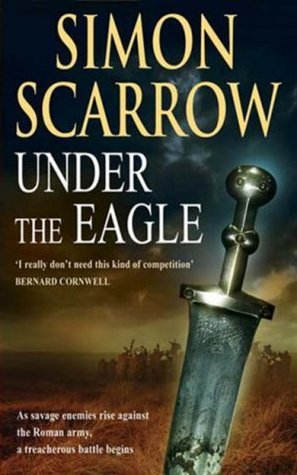
There are some books you discover by accident. Others you seek out. But then there are books that are handed down to you, like a well-worn coat or an old family photograph. That’s how Under the Eagle by Simon Scarrow entered my life. It wasn’t a recommendation from a teacher or something I found in a library. It was on the bookshelf at home, next to some Wilbur Smiths, a few Clive Cusslers, and the dusty westerns my dad used to love.
My dad was a great reader. Right into his 80s, he always had a book on the go. He loved action, adventure, strong characters and a cracking pace. I think I inherited a lot of that from him. He passed away in February 2024, and it still catches me sometimes, the idea that he’s not there, probably halfway through something gripping and gritty.
Under the Eagle was one of his favourites. I was probably about 18 or 19 when I picked it up. I’d read fantasy, I’d read thrillers, but I’d never gone deep into historical fiction. The Roman Empire seemed a bit dry, to be honest. I expected heavy exposition and dusty politics. What I got was something else entirely.
Straight into the Action
Simon Scarrow doesn’t mess about. He drops you straight into the grit and danger of Roman military life. No long-winded introductions. No endless backstory. Within a few pages, you’re marching with the legions. You can feel the weight of the armour, the sting of sweat in your eyes, the tension before battle.
At the heart of it all are two characters: Cato and Macro. One’s a young, educated recruit. The other, a tough, experienced centurion. Their dynamic is brilliant. It’s funny, it’s sharp, and it’s real. You instantly believe in them. You care what happens to them.
It was my first taste of what great historical fiction could be. Not a history lesson dressed up in fiction, but a fully living, breathing world. A world with mud, blood and brotherhood. And I was hooked.
A New Kind of Escapism
What struck me most about Under the Eagle was how grounded it felt. I’d come from fantasy worlds where anything could happen. Here, the stakes were just as high, but there were no magic swords or ancient prophecies. Just muscle, cunning and discipline.
Yet it was still escapism. The world of the Roman legions was as rich and absorbing as any fantasy kingdom. You could almost hear the clash of shields, the roar of the crowd in a Roman fort, the rustle of maps in a commander’s tent. It felt lived in, worn, like a place you could actually go if you had the nerve.
This changed something in me as a reader. It made me realise that escapism doesn’t have to mean dragons and aliens. It can be grounded in the past and still sweep you off your feet.
Learning from Scarrow’s Style
Simon Scarrow’s writing is deceptively simple. It’s fast-paced, punchy and never gets bogged down. But beneath the surface, it’s doing a lot of heavy lifting. He builds characters in just a few lines. He weaves historical detail in without ever breaking the flow. He makes you feel smarter without showing off.
That was a revelation. As a writer, I took note. You don’t have to be flowery to be effective. You don’t need long chapters to make an impression. Sometimes it’s the sharp line, the tight exchange of dialogue, the sudden twist, that sticks with the reader.
It also showed me the power of research. You could tell Scarrow had done his homework. The world felt authentic, from the tactics to the terminology. But it never overwhelmed the story. It supported it. That’s something I’ve aimed for ever since – especially in my Space Ranger Fred books, where blending imagination and detail is key.
Brotherhood and Bravery
At its heart, Under the Eagle is about friendship. The bond between Cato and Macro is the spine of the story. They come from different worlds, but they trust each other. They rely on each other. And they grow because of each other.
That theme – camaraderie in the face of danger – stuck with me. It reminded me of the power of character-driven stories. Plot is vital, yes. But it’s the relationships that make you care.
I’ve carried that with me into every story I’ve written. Whether it’s fantasy, science fiction or children’s adventure, the best stories are about people. Their struggles, their loyalties, their laughter. Scarrow taught me that. And my dad, who loved those stories so much, reinforced it every time he handed me a book and said, “You’ll like this one.”
From the Page to the Real World
As a young adult, reading Under the Eagle was eye-opening. But it became even more significant years later when I spent time in South Africa, and travelled around parts of Africa. While it’s not Rome, the landscapes, the challenges, the history – they brought the raw, adventurous spirit of Scarrow’s novels to life in surprising ways.
Standing on dusty plains, feeling the weight of the sun, I imagined what it must have been like for Roman soldiers stationed far from home. That sense of place, of being on the edge of something vast and wild, became part of my own storytelling DNA.
Why Historical Fiction Matters
There’s something deeply human about historical fiction. It reminds us that people have always loved, fought, joked and dreamed. The context changes, the clothes change, but the hearts stay the same.
Under the Eagle made me appreciate that. It made me look at history not as a list of dates and battles, but as a collection of lives. Some famous. Most forgotten. All with a story worth telling.
That belief, I think, is at the core of why we write. To give voice to characters – real or imagined – and let them live again, even if only for a few pages.
A Nod to Dad
This post wouldn’t be complete without a thank you to my dad. He didn’t set out to teach me about writing. But by filling our home with books, by reading every day, by passing on stories he loved, he did exactly that.
Reading Under the Eagle felt like stepping into one of his conversations. Gritty. Humble. Uncompromising. It’s the kind of story he respected. And it’s the kind of storytelling I aspire to.
What I Took Away
Reading Simon Scarrow’s work, especially Under the Eagle, shaped me as both a reader and a writer. It taught me that historical fiction can be exciting. That tough characters can still have soft moments. That great stories don’t need gimmicks, just heart, craft and honesty.
It made me love the genre. And while I might write books about space rangers and flying chickens, the bones of my storytelling – pacing, character, grit – owe a great deal to that Roman eagle.
Coming Next in the Series
How one of my current favourites, Nick Louth, keeps me turning pages with gripping plots, clever twists and characters you just can’t stop reading about.