
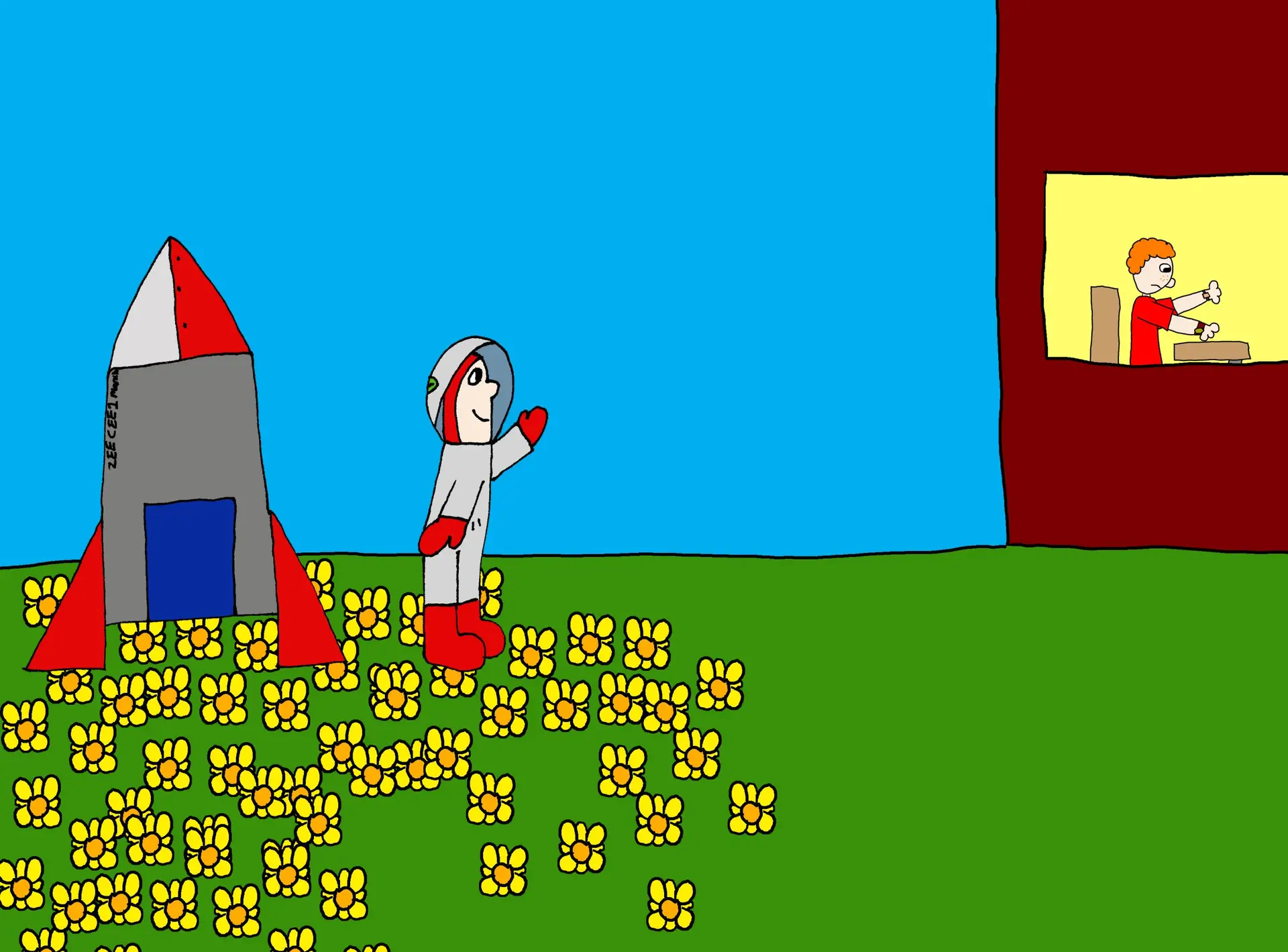
When I sit down to write a new book, I don’t start with a lesson or anything STEM, a message, or a moral. I start with a spark of imagination. It’s a “what if” that leads to a place where anything is possible.
As a children’s author, my job isn’t just to tell stories. It’s to open doors to new worlds where curiosity is encouraged and creativity knows no bounds.
In a time when screens are everywhere and attention spans are short, I believe the power of imagination in children’s books is more important than ever. Stories shape how children see themselves, others, and the world. And when we weave in adventure, problem-solving and science — like I do in my Space Ranger Fred series — we can inspire not just dreamers, but future thinkers and inventors.
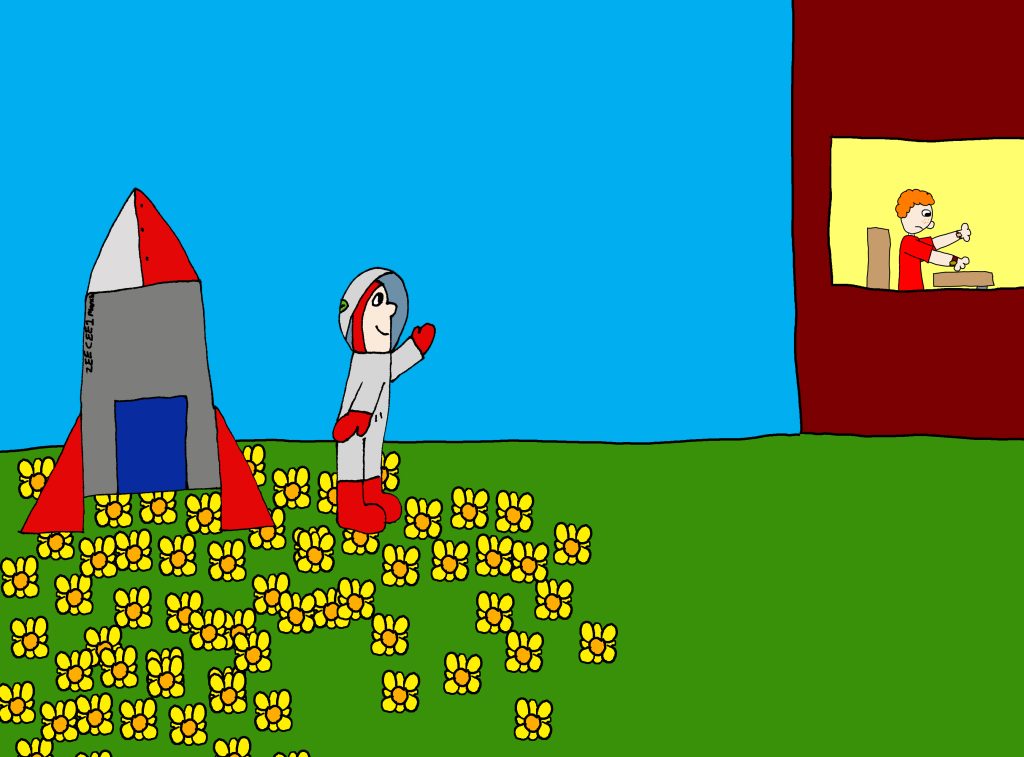
The Imagination Behind Space Ranger Fred
When I created Space Ranger Fred, I wasn’t trying to write a lesson in disguise, in fact teaching didn’t even occur to me. I imagined a curious, brave, very curious young hero who children could relate to. Fred, and his dog Jupiter, that might be a cushion or a real animal were born from that spark.
Fred’s journeys across the galaxy became a way to explore real-world concepts like gravity, renewable energy, teamwork, and even empathy, all while having fun.
I’ve had young readers tell me they want to be astronauts, build rockets, or save the environment, and all because of a story, my story!. That’s the magic of imaginative writing. It doesn’t just entertain…it inspires.
Imagination vs Information: Why Not Both?
Too often, we separate books into “fun” or “educational.” But why should we have to choose?
I write to do both and it comes naturally. My stories are full of action and laughter, but they’re also filled with ideas. Through storytelling, children absorb concepts naturally. They learn about science, technology, and problem-solving while laughing at alien mishaps and following Fred’s latest mission.
It’s not a lesson. It’s an adventure and the learning happens along the way.
Why Imagination Matters Now More Than Ever
In a world dominated by test results and screen time, we mustn’t forget that innovation begins with imagination.
Stories help children:
- Think creatively
- See the world through different eyes
- Build confidence in their ideas
- Solve problems
- Grow emotionally and intellectually
That’s why I write the way I do, to keep the door to imagination wide open.
Storytelling as a Bridge to Learning
I’m proud that teachers and parents tell me my books get children excited about reading and learning, without them even realising they’re learning something. The old-school layout with text interspersed with amazing images makes my books a reader and parents love it.
With Space Ranger Fred, I blend silly with serious, wild ideas with real-world knowledge. And now, Fred’s world is growing.
I’m currently working with a brilliant team to turn Fred’s stories into:
- An animated STEM TV show
- An educational video game
- An interactive online learning platform
All designed to help children learn through play, screen time that matters, and stories that fuel their imagination.
Encouraging Imagination at Home and in Classrooms
You don’t need a science lab or a bookshelf full of classics to inspire a child’s imagination.
Try:
- Reading aloud and doing character voices
- Asking “what if” questions about everyday things
- Letting them make up their own endings
- Building cardboard rockets
- Writing short stories together
Imagination is free, and it’s one of the most powerful tools a child has.
A Final Thought
I didn’t start writing children’s books to teach science. I did it to tell good stories. The fact that children learn, grow, and get inspired in the process is a wonderful bonus.
So if you believe in the power of imagination and you’re looking for STEM books for kids, space adventure stories, or simply fun reads that spark big ideas, I invite you to explore Space Ranger Fred.
Because every great journey starts with a little imagination — and one simple question:
What if…?
