When you pour your heart, time, and soul into a book, you want it to be perfect. Every word chosen carefully, every page formatted neatly, every illustration exactly where it should be. You read it dozens of times, proof it until the words blur, and still, somehow, a little typo sneaks through. Or maybe a line isn’t aligned quite right, or a paragraph looks strange on a Kindle screen.
For many self-published authors, that’s the nightmare moment — the sinking feeling when a reader messages you to say, “Just so you know, there’s a missing word on page 42.”
I used to dread that too. But recently, when I launched Space Ranger Fred and the Great Galactic Bake Off, I learned that publishing with a few small mistakes isn’t the catastrophe I once thought it was. In fact, it can be one of the most valuable parts of the journey.
The Bake Off Begins
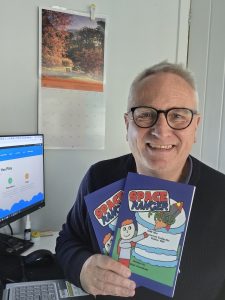
When Space Ranger Fred and the Great Galactic Bake Off launched, I was buzzing. The book had been months in the making. It’s the latest in my Space Ranger Fred series — a fun, STEM-inspired adventure featuring Fred, his dog Jupiter, and the eccentric Space Ranger Zando Centauri. This time, they’re in the middle of an intergalactic baking competition that, naturally, involves exploding cakes and chaos.
I’d gone through every page with care, reviewed the illustrations, checked the layout, and tested the eBook version. I’d even had early readers take a look. But, as any self-published author knows, it’s impossible to catch everything.
Sure enough, after the first few days of release, a few eagle-eyed early readers messaged me. “Loved the story,” they said, “but there’s a missing comma here,” or “the spacing on one page looks odd.”
A few years ago, I might have been mortified. This time, I wasn’t. I thanked them. They were helping me make the book better.
The Beauty of Being Independent
One of the biggest lessons I’ve learned as a self-published author is that independence comes with flexibility. Traditional publishers have enormous editing teams, professional proofreaders, and production specialists. When they print a book, it’s final. If a mistake slips through, it’s expensive to fix.
For self-published authors, it’s different. We can adjust, re-upload, reprint, and improve — sometimes within hours. That’s a huge advantage.
When early readers pointed out issues in The Great Galactic Bake Off, I was able to fix them almost immediately. I updated the manuscript, adjusted the formatting, and within a short time, the corrected version was live. That kind of agility simply isn’t possible in traditional publishing.
And here’s the thing — readers don’t expect self-published books to be flawless. What they want is authenticity, creativity, and care. They value connection. When they see an author responding quickly, being transparent, and improving their work, it builds trust.
Mistakes Are Proof of Progress
Typos, formatting errors, or minor inconsistencies aren’t signs of failure; they’re signs of movement. They mean you’re learning, publishing, growing, and improving.
No one starts as a perfect publisher. Even big-name authors with major publishers behind them have stories about mistakes that slipped through. Stephen King’s The Shining had errors in its early prints. J.K. Rowling’s Harry Potter and the Philosopher’s Stone first edition contains typos — and those copies are now collector’s items.
I’m not suggesting you aim to include typos for value’s sake, of course, but the point is this: even the most polished professionals aren’t immune.
As a self-published author, every release teaches you something new — about layout, font choices, reader engagement, or distribution. Each correction you make isn’t a step back; it’s a step towards mastery.
The Learning Curve to the Big Stores
Getting a self-published book onto the shelves of Waterstones in the UK, into major supermarkets, or into US bookstores is a huge goal — and it’s not easy.
It’s a learning curve that goes far beyond writing and editing. You have to understand ISBNs, printing standards, distributor relationships, wholesale discounts, and returns policies. You need professional-quality covers and consistent branding across your titles. Retailers like Waterstones or WHSmith expect books to meet specific production and commercial standards — and they’re right to do so.
That’s where small mistakes actually become valuable. They teach you how to refine your process before you scale. By catching and fixing issues early in your independent publishing journey, you develop the habits and standards that major stores will expect.
In many ways, Space Ranger Fred and the Great Galactic Bake Off is my test run for that. Every bit of feedback — from layout quirks to reader comments — is helping me shape future editions that can stand proudly on shelves anywhere in the world.
Perfection Is a Myth (and an Expensive One)
Let’s be honest: chasing perfection can be paralysing. I’ve known writers who never hit “publish” because they’re terrified of releasing something imperfect. They revise endlessly, second-guess themselves, and spend money they don’t have trying to make the book “perfect.”
The truth is, no book ever is. Every story reflects the moment the author wrote it — who they were, what they knew, and how they saw the world at that time. Even if you went back and rewrote it a year later, it would be different.
That’s part of the beauty of creative work. It evolves with you.
If you wait until you feel ready, you’ll never publish. Publishing, especially as an independent author, is about learning by doing. Each release is a lesson, not a final exam.
Early Readers Are Gold
I can’t stress this enough — early readers are your allies. They’re not critics to be feared, but partners in the process.
When The Great Galactic Bake Off came out, the first readers weren’t just enjoying a fun space story about exploding cakes and eccentric aliens. They were helping me fine-tune the finished product. They spotted things my eyes had missed after months of editing.
It’s a humbling and refreshing part of being an author. Writing and publishing aren’t solitary pursuits, even if they feel that way sometimes. The relationship between writer and reader is a conversation. You tell your story; they respond, and through that dialogue, the work grows stronger.
That’s why I always encourage other writers not to panic if their first release has small flaws. Treat it as an open conversation with your readers. Listen, thank them, improve, and move forward.
The Business of Writing
As writers, we often forget that publishing is a business. And like any business, it involves product development, customer feedback, and iteration.
The first version of Space Ranger Fred and the Shoelace Adventure taught me a lot about self-publishing logistics. The Bake Off book has taught me even more — particularly about layout, digital formats, and how small adjustments can dramatically improve the reading experience.
Each book in the Space Ranger Fred series has been a step towards building something bigger. I’m not just writing stories; I’m creating a brand — one that will eventually include an animated TV show, a video game, and an educational platform that makes STEM learning fun.
Those goals require consistency and quality, yes, but also a willingness to experiment, learn, and occasionally stumble along the way.
Why Readers Appreciate Honesty
Readers aren’t fooled by glossy perfection. They connect with real voices, genuine effort, and visible passion. When they see an author being open about the process — sharing what went right and what didn’t — it creates authenticity.
After launching The Great Galactic Bake Off, I shared on social media that early readers had spotted some formatting quirks and that I’d already fixed them. The response wasn’t embarrassment; it was engagement. People were interested. They appreciated that I took their feedback seriously.
That kind of transparency builds loyalty. Readers want to be part of the journey. When they feel they’ve helped shape a book, even in a tiny way, they become invested in your success.
Embracing the Imperfect
Publishing with small mistakes isn’t about carelessness. It’s about courage. It’s about understanding that growth happens through doing, not waiting.
If I’d held Space Ranger Fred and the Great Galactic Bake Off back until I was absolutely certain every comma was perfect, it might still be sitting on my hard drive. Instead, it’s out there, entertaining young readers, making them laugh, and teaching them a bit about science along the way.
And thanks to my readers’ keen eyes, the book is now even better.
Lessons for Fellow Authors
For anyone out there self-publishing, here’s what I’ve learned from this experience:
- Publish, then perfect. Don’t wait for flawlessness. Get your book into readers’ hands and let real-world feedback guide you.
- Engage with your readers. When they spot something, thank them. They’re not criticising; they’re collaborating.
- Use your flexibility. The beauty of self-publishing is control. You can update, refine, and relaunch without asking anyone’s permission.
- Learn from every book. Each project teaches you something new — not just about writing, but about publishing, marketing, and business.
- Keep your long-term vision in mind. Each book is a stepping stone towards bigger goals — whether that’s getting into Waterstones, US bookstores, or even creating an international media brand.
Aiming for the Shelves
My long-term goal is to see Space Ranger Fred books in physical stores — on the shelves of Waterstones, in UK supermarkets, and in bookshops across the US. That takes patience, persistence, and professionalism.
Distributors and retailers look for consistent quality, sales history, and proven demand. The more refined my books become — through experience, feedback, and correction — the closer I get to that dream.
I see The Great Galactic Bake Off as a vital part of that journey. Each revision, each improvement, is another step toward making Space Ranger Fred a name children recognise and parents trust.
A Message to Readers
If you’ve read one of my books and spotted a tiny slip-up — thank you. You’ve helped make the next edition better. You’ve been part of the creative process in a way that matters more than you might think.
Self-publishing isn’t about perfection; it’s about connection. It’s about sharing stories that inspire, educate, and entertain. It’s about taking risks, learning in public, and showing young readers that creativity doesn’t come from getting everything right, but from daring to begin.
So, the next time a typo pops up or a page looks a little uneven, I’ll smile, take a note, and fix it. Because that’s how good books — and good authors — grow.
The Ongoing Adventure
Every Space Ranger Fred story is an adventure, both for the characters and for me as the author. Each one teaches me something new about storytelling, about the publishing world, and about myself.
When I look at the journey so far — from The Shoelace Adventure to The Great Galactic Bake Off — I see progress, not perfection. I see creativity taking shape, and a community of readers who’ve supported me every step of the way.
That’s what keeps me going. Not the idea of flawless pages, but the excitement of the next story, the next child who laughs at Zando’s latest invention, and the next opportunity to make each book better than the last.
After all, writing, like baking, is about trial and error. You mix, test, and taste until you get it right — and sometimes, even the messy ones turn out delicious.