How David Eddings Taught Me That Grown-Up Fantasy Could Still Feel Like Home
It’s strange how certain books find their way into your life. You’re not looking for them. You’re not even sure why you’re drawn to them. And yet there they are, staring at you from the library shelf or tucked in the corner of a bookshop like they’ve been waiting all along. That’s exactly how I discovered David Eddings.
I was about 17 years old. Still young enough to be open to anything, old enough to know that I wanted stories that went deeper, that stretched wider, that weren’t afraid of the dark. Up until that point, my bookshelf was a cheerful chaos of everything from Enid Blyton and Roald Dahl to Wilbur Smith and Tolkien. I’d read Narnia inside out. I had explored the gentle rivers of Wind in the Willows, the clever comedy of The Big Joke Game, and the wild frontiers of Africa with Wilbur Smith. But now I wanted something more.
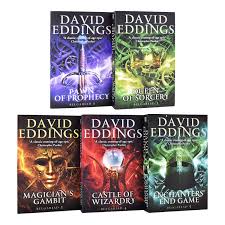
Enter Queen of Sorcery by David Eddings.
The Accidental Beginning
I didn’t know it was the second book in a five-part series. I didn’t even really know who David Eddings was. The book just had a certain look to it. That slightly mysterious, fantasy-wrapped-in-classic-art cover. It caught my attention. It looked different to anything else on the shelf. I picked it up, flicked through the first few pages, and that was that. Hooked.
Looking back, I laugh at myself. Who starts with the second book in a series? But that was the beauty of Eddings. Even though I’d come in late, I didn’t feel lost. His characters were so well-crafted, so believable and layered, that I felt like I’d always known them. I caught up quickly, and before long, I’d hunted down Pawn of Prophecy, the first book in The Belgariad, and devoured the rest of the series.
World-Building That Didn’t Feel Like Work
One of the things that struck me straight away was how easy Eddings made it to slip into his world. Some fantasy authors can get bogged down in lore, history and endless geography. It becomes homework. But not Eddings. His world-building was rich but digestible. He gave you just enough to paint the scene and then got out of the way so the story could live.
There was magic, yes. But it was logical, structured, with rules and costs. There were prophecies and politics, but also humour, romance and friendship. And it wasn’t just about plot. It was about people. The way characters spoke, the way they teased each other, the way they grew and stumbled and learned. It felt real.
That was a revelation to me as a reader and later, as a writer. I learned that fantasy didn’t have to be grandiose or detached. It could be grounded. It could be relatable. It could be fun.
The Power of a Great Cast
If you’ve read The Belgariad, you’ll know that what truly makes it sing is the cast of characters. Garion, the reluctant hero. Polgara, the wise and quietly terrifying aunt. Silk, the quick-talking spy with a heart of gold. Belgarath, the ancient sorcerer who acts more like your dodgy uncle than a mystic sage.
They weren’t just fantasy archetypes. They were people. Flawed, funny, brave and vulnerable. You wanted to travel with them. You wanted to share their meals, sleep around their campfires, laugh at their squabbles.
That sense of camaraderie was something I hadn’t experienced quite the same way before. It reminded me of the best moments in The Famous Five or even The Lord of the Rings, but here it felt more personal. More intimate. Eddings had a gift for group dynamics, and as a storyteller, I absorbed every bit of it.
In my own books, especially with Space Ranger Fred, I always try to create a cast that feels like a team. Different personalities, different strengths, a bit of conflict, a lot of humour, but always united by a shared mission. I can trace that directly back to The Belgariad.
Growing Up With the Story
What also stood out was how Eddings allowed his characters to grow. Over five books (and then five more in The Malloreon), you see Garion go from a farm boy to a king. But it never feels forced or too quick. There are doubts, mistakes, heartbreaks and hard lessons. That arc gave the story weight.
At 17, that meant a lot to me. I was on the edge of adulthood myself. Unsure what I wanted. Unsure if I was good enough. Reading about a character who didn’t have it all figured out but still found the courage to keep going resonated in a big way.
A Voice That Made It All Feel Easy
Eddings’ style was deceptively simple. Clear, direct sentences. A rhythm that made it hard to stop reading. Dialogue that bounced along naturally. He didn’t overwrite. He didn’t try to sound clever. He just told the story.
That approach influenced me more than I realised. I often say I write for children and young readers, but the truth is, I try to write for the reader inside the reader. The part of us all, no matter our age, that just wants to be told a great story.
Magic Without the Fuss
Eddings’ magic system deserves a special mention. It was one of the first fantasy series where I felt the magic made sense. There was structure. There were consequences. It wasn’t just waving a wand and saying words. And yet, he never explained too much. He kept some mystery. Enough to make you wonder.
I’ve carried that lesson with me. Whether I’m writing space gadgets in Space Ranger Fred or whimsical nonsense in Princess and Chicken, I aim for the same balance – explain enough to make it believable, leave enough to keep it magical.
Adult Fantasy With a Warm Heart
What I appreciate more now, looking back, is that Eddings wrote adult fantasy that never lost its warmth. Yes, there were battles. Yes, there were politics and dark magic and heavy themes. But there was always humour. Always love. Always hope.
That balance is harder to achieve than it looks. Many writers tip too far one way. Too grim or too fluffy. Eddings walked the line brilliantly. And that’s something I strive to do in my own writing.
Full Circle – From Reader to Writer
Reading Queen of Sorcery as a teenager was one of the first moments I realised that fantasy didn’t have to mean dragons and dungeons and big long speeches. It could be character-driven. It could be charming. It could be fun.
And while I didn’t know it at the time, it shaped me. It planted seeds.
Years later, when I started writing seriously, those seeds grew. I found myself creating characters that bickered and bantered. Worlds with their own rules. Stories that aimed to be exciting but never cold.
Eddings showed me that stories don’t have to shout to be powerful. Sometimes the quiet moments – the gentle jokes, the little glances, the long walks with friends – are what we remember most.
The Book That Chose Me
They say not to judge a book by its cover. But I did. And I’m glad.
Picking up Queen of Sorcery by accident changed my reading life. It gave me a new lens on fantasy. It invited me into a world I didn’t want to leave. And it made me want to write stories that gave others that same feeling.
So thank you, David Eddings. You showed me that grown-up fantasy could still feel like home.
Coming Next in the Series
How Under the Eagle by Simon Scarrow, another of my dad’s favourite authors, introduced me to the grit, glory and comradeship of historical fiction through the eyes of Roman legionaries.

Leave a Reply